

Can You Paint Tile? A Complete Guide to Transforming Old Tiles Without Replacing Them
Jul 20, 2026 10 minute readThe dull and dated look of tiles that have seen better days is hard to ignore, but so is the hassle and cost of a full retile. Which leads to the question every DIYer and interior design enthusiast asks: can you paint tile? The answer is a short yes! If you’re looking to make the biggest impact without breaking the bank, painting natural stone or ceramic tile brings fabulous, long-lasting color to walls, backsplashes, floors, and more.
Maybe it’s the one eyesore making your kitchen lackluster. Maybe it’s the forgotten powder room or uninspired laundry room. The good news is it doesn’t have to be that way. With the right preparation, primer, and paint, tiled surfaces can be refreshed and given an entirely new look. And guess what? It’s a transformative project that can be tackled in a single weekend. Ahead, we're breaking the entire process down to help you achieve a professional finish.
Key Takeaways
- Painting tiles delivers a new look for the least amount of money, but not all paints are recommended for areas exposed to moisture and high foot traffic.
- Proper tile cleaning and preparation and choosing the right paint products are essential for long-lasting results.
What Types of Tile Can Be Painted Successfully
If you're anything like us, getting a tile do-over has probably crossed your mind at least once. Perhaps you fancy a bit of bold color or want to elevate outdated tiles and bring your space into this decade, but a costly and messy replacement isn’t in the cards just yet. Can you paint tiles? Yes. Is it a cheaper and more convenient option? Yes. But what materials can be painted successfully?

Ceramic wall tile is one of the easiest to give a new lease of life with a lick of paint. Of course, its smooth, glazed finish requires a primer made for slick surfaces to ensure paint bonds. Glass tile, too, can be painted but requires meticulous preparation. To prevent chipping, peeling, and moisture-related failures, a specialized high-adhesion primer designed for glossy materials is needed.
Porcelain’s hardy, durable, and impermeable nature means paint has a harder time sticking. You can still paint it, but expect to spend more time keying the surface with a dedicated, high-adhesion bonding primer. Natural stone, such as Carrara, Thassos, and Calacatta marble tile, can also be painted, but only if you prep it properly. Because of its porous composition, marble is permeable and will absorb paint. For this reason, the tile surface should be protected with a stone sealer beforehand.
Which Areas of Your Home Are Suitable for Painted Tile
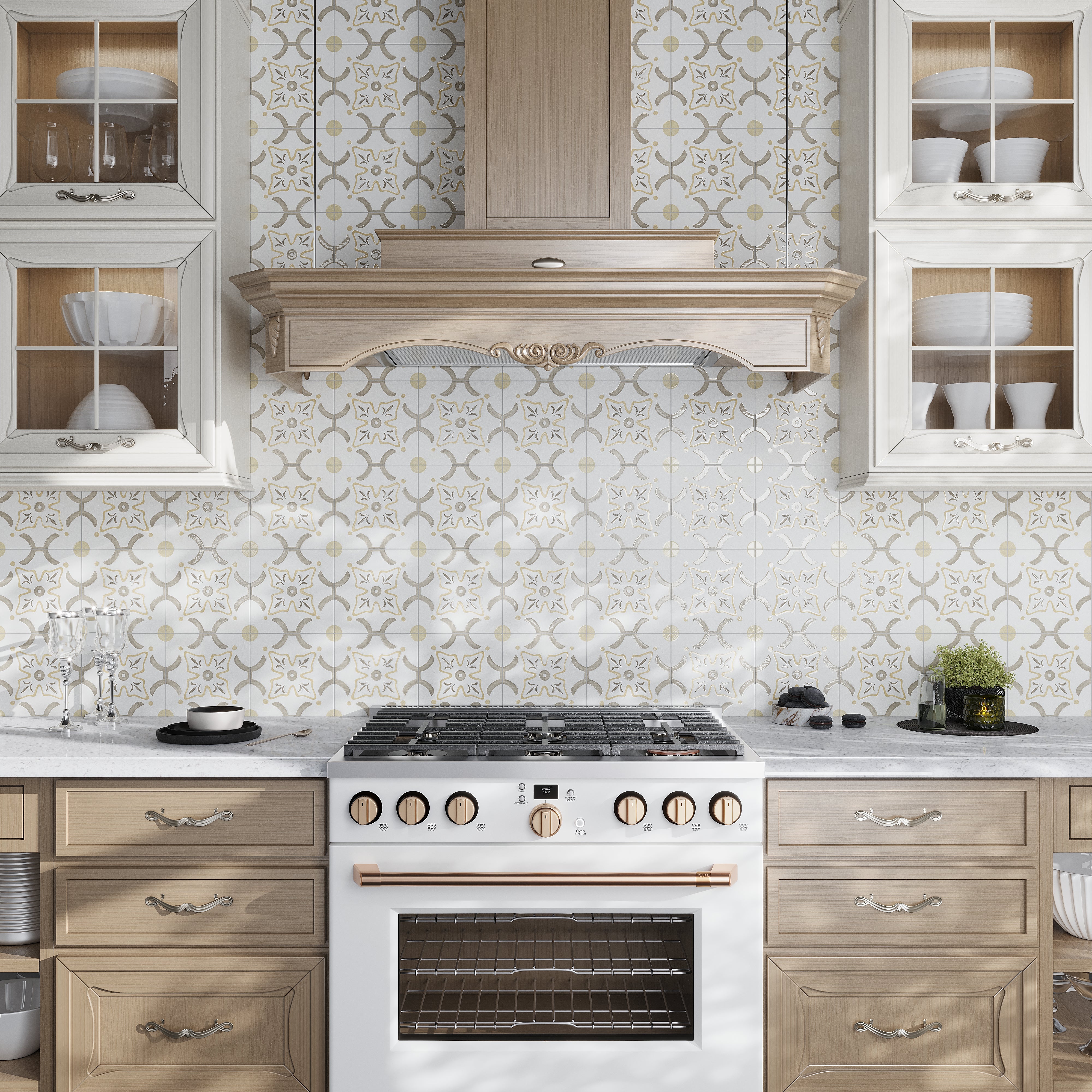

We’ve finally answered the “can you paint tiles” question and discussed the different tile types suitable for the job. So where exactly does this technique work? Tiles go everywhere: fireplace surrounds, kitchen backsplashes, bathroom walls, patio floors, and more. Some areas can receive paint better than others, so it’s important to know what will work and what won’t.
Walls, backsplashes, and fireplace surrounds are excellent candidates for painting, with a lifespan of around 5-7 years or longer. This is largely because vertical surfaces experience little to no abrasion. With proper surface preparation and paint formulations, revamping kitchen, bathroom, and living room tile can up the style ante of your interiors at a fraction of the cost of replacement.
Can you paint tile floors? While the answer is “yes”, painting floor tiles isn’t the best move due to footfall and abrasion, both of which can wear paint film down quickly. Retiling floors is almost always a better long-term investment, with designs like Purple, White, Yellow 9x9 Matte, Glossy Floral Square Porcelain Tile offering the best aesthetic value. That said, if you’re set on tackling your floors, it’s important to choose paint that’s specially designed to withstand foot traffic, scratches, and everyday wear.
The same caution applies to shower surrounds, since constant water exposure and regular cleaning can break down even the best-sealed paint. For shower wall tile and especially floors, expect periodic touch-ups as paint can start to show wear within 1-2 years, depending on how heavily the area is used.
What Are the Benefits and Drawbacks of Painting Tile

With tile painting, the obvious benefit is that you don’t have to shell out hundreds or thousands of dollars to give tiled surfaces a refreshed look. Buying a few gallons of paint, primer, and other prep materials is way more cost-effective than demoing and replacing old tile. Not to mention, refinishing existing tile can be a more sustainable option, as it allows you to get more use out of the material by delaying replacement.
As for the downside, be mindful that while painting tile is a great budget-friendly weekend DIY, it has a shorter lifespan and should therefore be considered a short-term option. Installing new tile proves a remarkably durable, long-term solution, with a wide range of stunning options that stand the test of time.
Refinishing tiled surfaces with paint won’t change the tile size and shape that no longer suit the space. And if you’re planning to put your property up for sale, fresh tilework adds more resale value than a temporary cosmetic fix.
What Type of Paint Works Best for Tile Surfaces

Can you paint tile with regular paint? Standard paints struggle to adhere properly, especially to a glossy or polished finish. Some kinds of paints can also make a floor slippery. So how do you know which paint to use?
To paint large-format or small tiles, you need specialized paint and primer specifically designed for tiled surfaces to ensure a strong, durable finish. These products are designed to stick onto smooth, non-porous surfaces and typically have higher pigmentation for better coverage and fewer streaks.- Epoxy Tile Paint: A two-step epoxy paint mixes components and stands out for its strength and resilience. After mixing, the resulting paint is applied to the tile to create a hard, waterproof finish, making it suited for areas that experience heavy foot traffic or water exposure.
- Enamel Tile Paint: Available in water-based and oil-based formulations, enamel paint dries to a hard, smooth finish. It is moisture- and scratch-resistant, just what’s needed for bathroom walls, kitchen backsplashes, fireplace surrounds, and decorative tile projects.
How to Prepare Tile Before Painting for Better Results

This is the step homeowners rush. Before lifting your painting brush, take time to inspect tiles for cracks or loose grout. Use a clear epoxy to remedy any minor defects that may otherwise prevent a flawless finish. Next, give the tiled surface a clean with warm water and sugar soap to remove dirt, grease, or grime.
A glossy tile finish can shed paint more easily. To prevent this from happening, lightly sand each tile face with medium-grade sandpaper to dull the gloss enough for primer to stick. Remove the dust created, then rinse the tiles and let them dry completely.
The make-or-break step: applying a high-quality primer. Opt for a product formulated for non-porous surfaces, such as those labelled "tile primer" or "epoxy primer". Apply the primer to the tiled surface, cutting in the edges with a small brush. Most jobs need two primer coats to attain the full depth of the product.
How Long Does Painted Tile Last and How Can You Maintain It
With proper surface preparation and high-quality primer, paint, and sealer, a tile installation refinished with paint can last 3-5 years before showing signs of wear. Periodic touch-up coats every couple of years can extend the paint’s lifespan.
Part of ensuring paint doesn't deteriorate is proper upkeep. For cleaning and maintenance, wipe down tiles regularly with a solution of warm water and a mild, non-abrasive cleaner. Steer clear of harsh chemical or abrasive cleaners that can cause premature wear.
Should You Paint Tile Yourself or Hire a Professional

Can you paint tile yourself or enlist a pro? It's DIY-friendly if you can commit to proper surface preparation without cutting corners and follow the recommended drying time. Most projects fail due to rushing the process. If you need to paint shower surrounds or larger areas, it’s best to call in a professional specializing in refinishing tiled surfaces to get you a much longer-lasting result.
Conclusion
There you have it: an easy-to-follow guide answering the question, "Can you paint tile?" With proper surface prep and using high-quality priming, painting, and sealing products, you can transform tired tiles into an updated feature. Keep in mind, though, that paint refinishing is a cosmetic refresh, not a permanent fix. Ultimately, how long this affordable transformation holds depends on the quality of the application and how much wear the area gets.