

What Is the 70-20-10 Rule in Decorating? Creating the Perfect Color Harmony
Apr 08, 2026 7 minute readCreating well-appointed interiors requires a balance of color. That’s where the 70-20-10 rule comes in. Designers swear by this decorating trick, which is a simple concept used to create a harmony of color within a room. For anyone who wants a little guidance, this blog post is for you. Keep reading as we explore how this interior design principle works, and how it’s a handy tool for when choosing kitchen, bathroom, or living room tile.
Key Takeaways
- The 70-20-10 rule in decorating achieves intentional and sophisticated interiors by dividing the room’s scheme into 70% dominant color, 20% secondary color, and 10% accent color.
- While the 70 20 10 color rule isn’t set in stone, it’s a great starting point to decorate with confidence, avoid visual overwhelm, and choose tiling materials and furnishings that tie into the room’s overall aesthetic.
How the 70-20-10 Rule Works

You walk into a friend's living room and think, "This space is breathtaking!" Back in your own home, something feels off, and you can’t quite put your finger on it. More often than not, it's the color scheme. The 70 20 10 color rule is more than numbers; it’s a jumping-off point to feel more confident when designing any room. This time-tested formula suggests that a room’s palette should feature a dominant color (70%) that sets the tone, paired with a secondary color (20%) and an accent color (10%). Ultimately, the goal is to prevent visual overwhelm while still allowing room for personality and contrast.
Why This Color Rule Works So Well in Interior Design
The 70-20-10 rule in decorating is essential because it makes choosing surface coverings like tile, as well as furnishings, easier, resulting in a foolproof scheme. It provides structure: too many competing hues can feel chaotic, while too many similar shades can leave a space looking flat.
70% color provides a foundation that anchors the room, 20% color supports the main hue and adds interest, and 10% color serves as an accent that injects pizzazz. By assigning roles to each color and using them in clear proportions, the magic happens. A sense of visual hierarchy is achieved, and interiors stop feeling messy or dull.
How to Use This Rule in Different Spaces


The beauty of 70 20 10 interior design is that it applies to every room: entryway, living room, kitchen, bathroom, you name it. Start by identifying the dominant color, which, in many scenarios, is a neutral shade or a muted tone. Nothing too crazy. Think whites, grays, sandy browns, and soft blues or greens. This color makes the largest surface, for example, the entire floor and a significant portion of the wall. It does more than serve as a backdrop for secondary and accent hues; it sets the mood, grounds the room, and guides your design choices.
Next, choose a supporting color that makes up 20% of the room. It can be a contrasting, complementary, or slightly darker shade that appears in medium-sized furnishings or walls, adding depth and interest without visual overwhelm. In some rooms, flooring can be 20%. Picture kitchen floor tile in a darker blue shade surrounded by white cabinets and walls that make up 70% of the room’s scheme. Lastly, decide on the smallest but most impactful color. 10% can be a bold tone dotted around the room in the form of a decorative accent piece to instantly draw the eye.
When applying the 70-20-10 rule for proportioning color in a room, think about the atmosphere you want to create and the existing elements, such as fittings and fixtures, so everything ties up well together. For instance, warm white (70%), light beige (20%), and hardwood tone (10%) can capture a soothing, spa-like bathroom ambiance. Picking three earthy, botanical shades, such as creamy white (70%), chocolate brown (20%), and olive green (10%), creates a cozy, comfortable lounge or bedroom setting.
How to Apply the 70-20-10 Rule with Tiles
Wall and floor tile can redefine a space, adding just the right oomph to take interiors to new heights. So, how to apply the 70-20-10 rule when installing new tilework? It’s simple; maintain proportion to keep things intentional and interesting. For example:
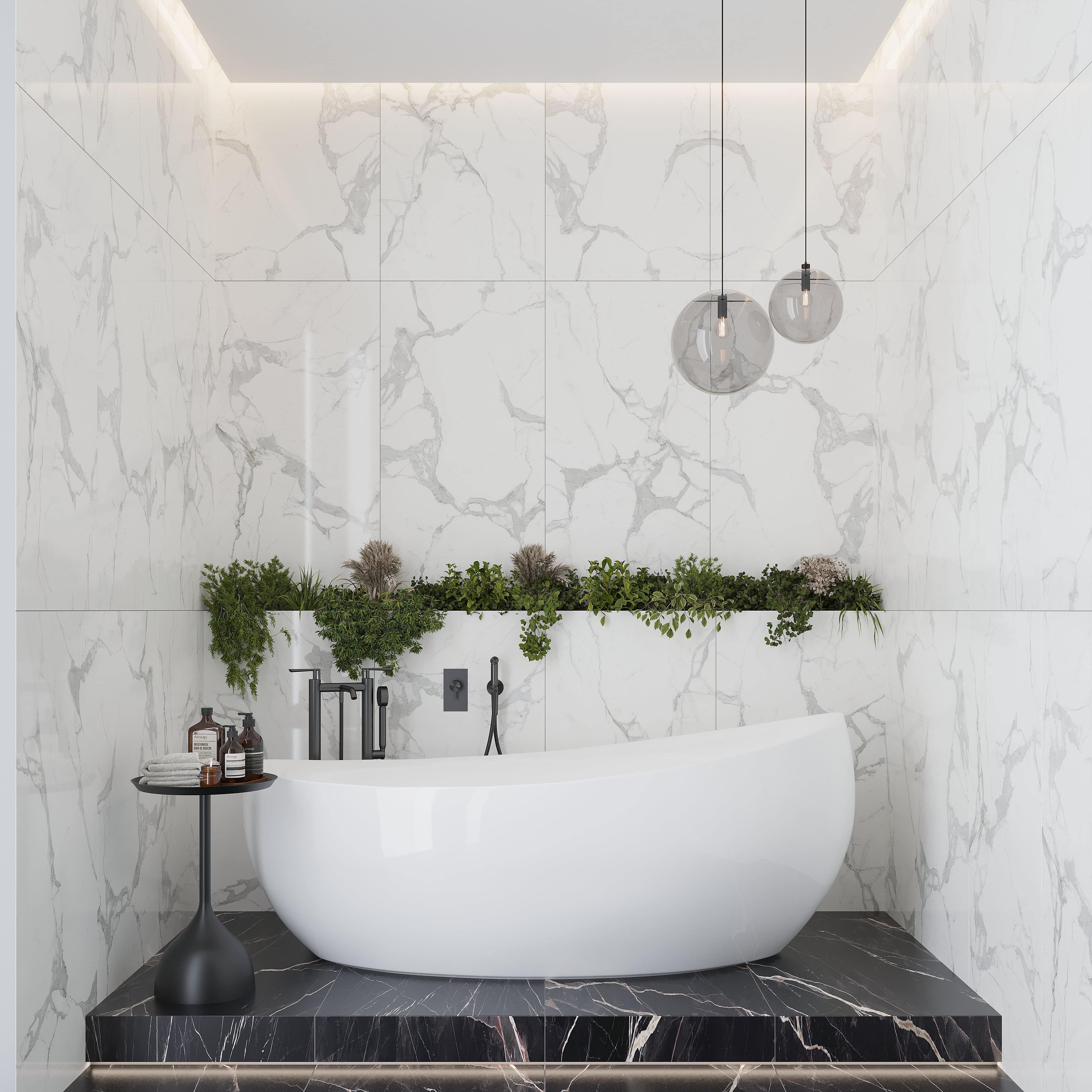

70% of the room’s design can be a large-format marble-look porcelain with stunning swirls, such as our Statuary White 24x48 Polished Porcelain Large Format Tile, covering the walls.
The secondary tile design that makes up 20% can be a contrasting color to the dominant feature. In this case, our Black Marquina 24x48 Polished Porcelain Large Format Tile.
Accent tile, making up 10% of the room, can be a pop of color or pattern that has presence but doesn’t detract from the two other tiling options.
Applied in terms of texture, the rule can work this way: 70% textured, 20% matte, and 10% glossy.
70-20-10 Rule vs 60-30-10 Rule: What’s the Difference?
You may have also heard of the 60-30-10 rule, but how does it compare to the 70-20-10 color rule? Both aim to bring a sense of balance that prevents the room from feeling overwhelming with too many clashing hues or so understated that the colors barely register.
The key difference between these two design techniques lies in how color is distributed:
- The 70-20-10 rule in decorating allows the dominant color to take the lead, creating a grounded, more restrained design scheme.
- The 60-30-10 rule in decorating gives greater presence to the secondary color, half as much as the main hue, resulting in a more dynamic, visually engaging space.
Common Mistakes to Avoid When Using the 70-20-10 Rule

How to apply the 70-20-10 rule without falling into common pitfalls. Watch out for:
- Not sticking to the proportions closely enough
- Choosing clashing colors that disrupt harmony
- Overpowering with a bold accent color
- Overlooking material texture and finish
- Neglecting the room’s size, layout, and lighting
Frequently Asked Questions
1. Is the 70-20-10 rule suitable for small spaces?
2. Can patterns and textures be included in the 70-20-10 rule?
3. What happens if you use more than three colors in a room?
4. How do you choose the right accent color for the 10% portion?
Opt for an accent hue that complements or contrasts the dominant and secondary color. With wall tile, this could be a bold mosaic used for the shower niche or a decorative backsplash border to add a punch to a field of large, neutral formats.
5. Does lighting affect how the 70-20-10 rule looks?
6. Is the 70-20-10 rule still relevant in modern interior design?
The 70-20-10 rule remains a significant guideline in decorating modern interiors, where cohesion, timelessness, and professional-looking results are the end goal. Still on the topic of color, read our blog to learn how to select the right grout shade for your project: The Ultimate Grout Color Selection Guide.