

What is Porcelain Tile? A Complete Guide for Homeowners
Dec 09, 2025 13 minute read
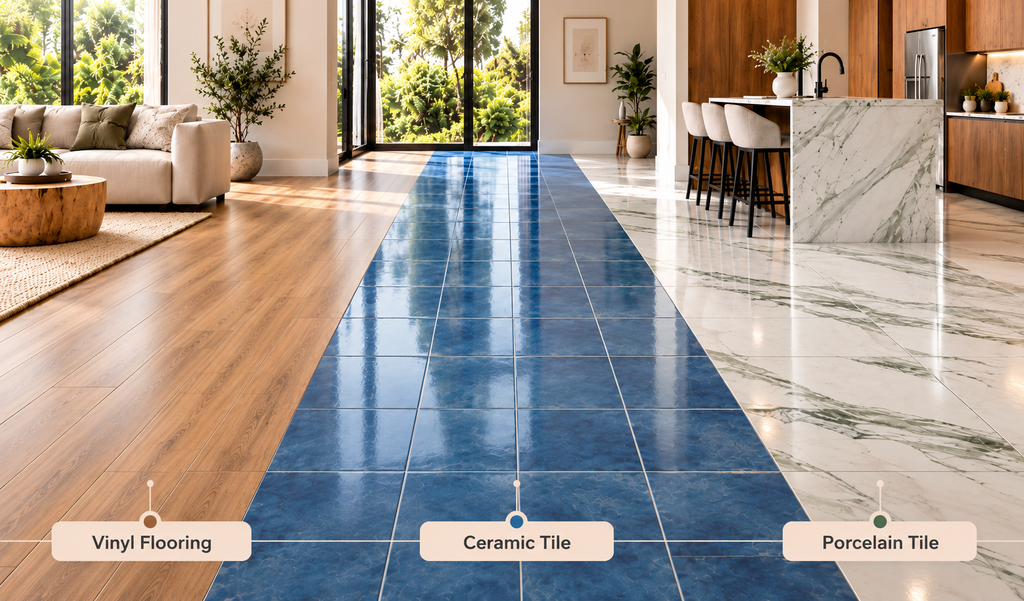
High-quality tile can transform the way you approach design. You want to choose material that not only defines your space but also makes you feel comfortable and content long-term. When it comes to porcelain tile, most homeowners know it looks great and stands up to everyday wear, but what really sets it apart from other wall and floor coverings is how it is made. In this blog, we unravel what is porcelain tile and where to use it. The craftsmanship and innovation involved paint a picture of resilience and timeless flair.
For one, you may not be aware that some porcelain flooring tiles have a water absorption rate of less than 0.5%, making them almost completely waterproof. Or that it can simulate genuine hardwood, onyx, terrazzo, and many other natural materials. Let’s explore all this in detail, including what porcelain tile is made of and why it stands above other surface coverings. Along the way, we’ll also share easy-to-apply design tips for creating a space you’ll absolutely love.
Key Takeaways
- The journey from production to a dense and robust tile with consistent coloring and thickness involves specialized clay compositions vitrified by intense heat.
- One of the benefits of porcelain is the sheer variety available, including designs that imitate natural materials.
- Wall and floor tiles are categorized by design and performance, which helps homeowners select suitable options for their needs.
- Popular options include large-format rectangles and squares, mid-sized hexagons, small-format star and cross, and penny round mosaics.
- With proper cleaning and care, the different types of porcelain tiles retain their aesthetically pleasing appearance for decades.
Definition
At its core, porcelain tile is a type of ceramic that is dry pressed into molds under high pressure and fired at extremely high temperatures, typically between 2,200 and 2,500 degrees Fahrenheit. Due to this blend of special clays and the firing process, the final product is a surface that outperforms expectations in almost any space: denser, stronger, and nearly impermeable. It can be left unglazed or finished with a smooth, glossy glaze.
What is porcelain tile made of? The raw materials playing a critical role in creating the tile’s fundamental characteristics include:
- Kaolin clay, providing structural integrity
- Feldspar, serving as a natural flux that lowers the melting point
- Quartz, contributing to hardness and impact resistance
Types of Porcelain Tile and Their Price Range
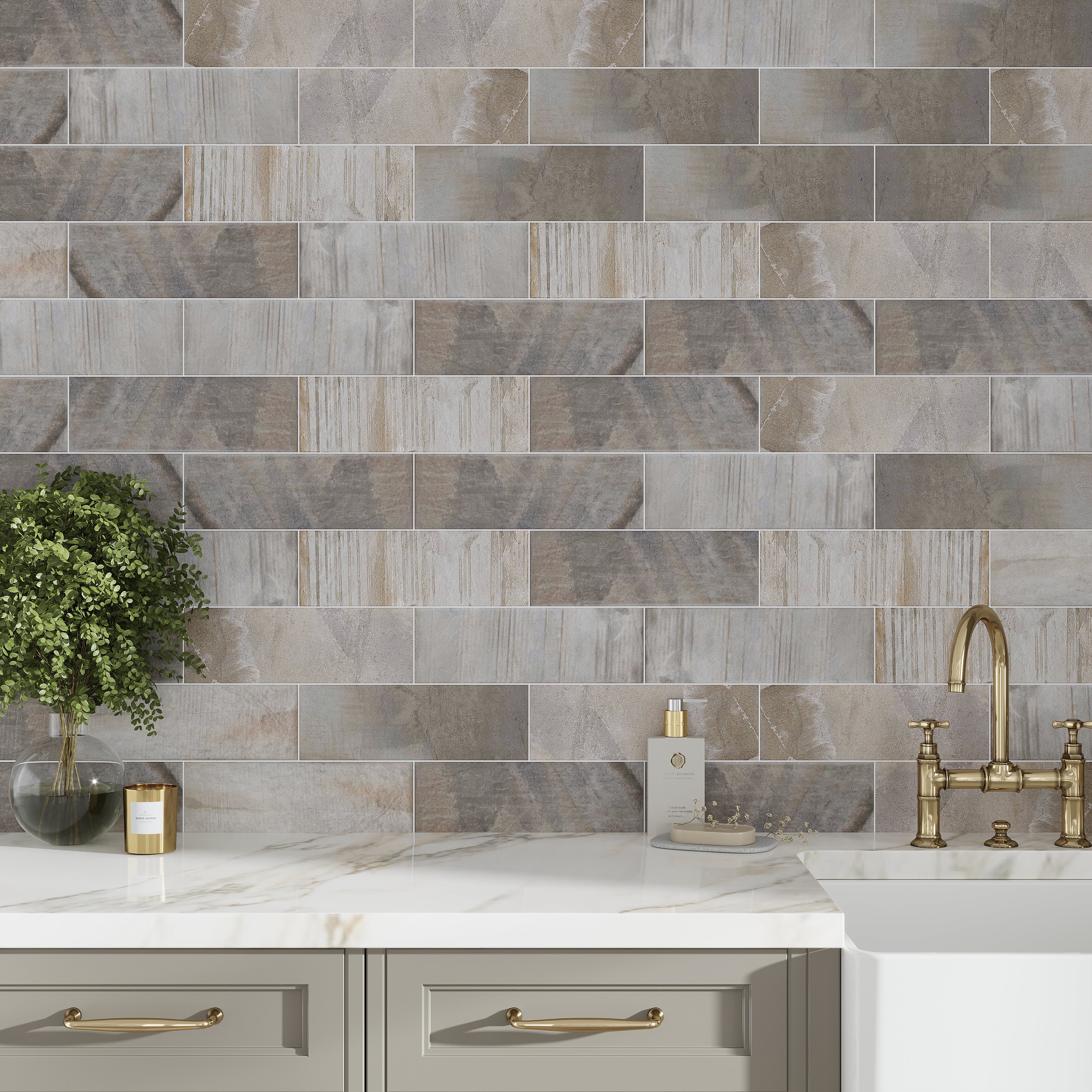
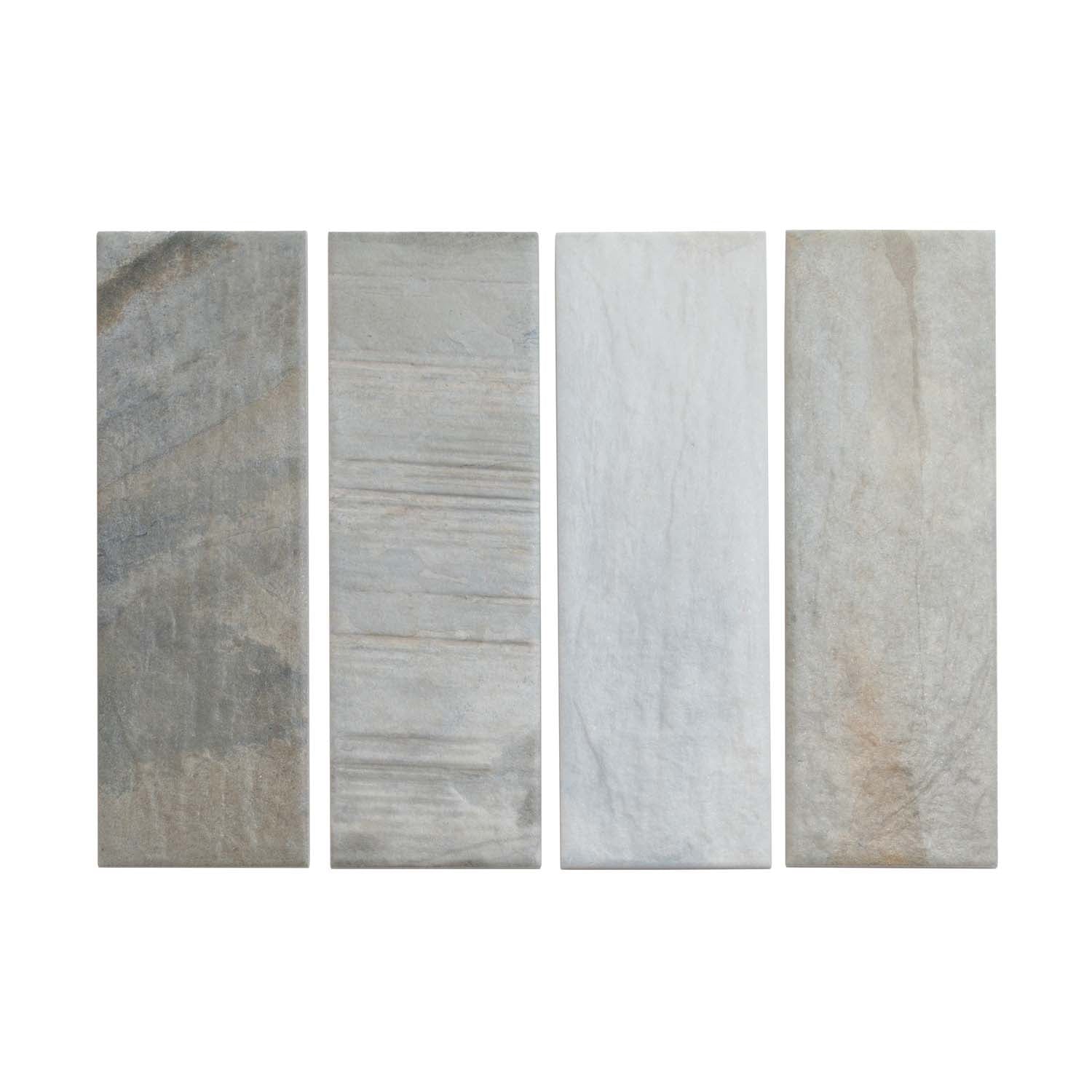
Glazed Porcelain Tile: This type features a porcelain body coated with a layer of liquid glass (glaze) before being fired a second time during the manufacturing process. This glaze creates a protective layer that repels moisture, stains, scratches, and wear. Like glazed ceramic tile, glazed porcelain can be matte, glossy, lappato, or textured, and allows for a vast range of colors, patterns, and designs, including those that mimic the look of wood or stone.
Unglazed Porcelain Tile: Unglazed tiles are left with their natural texture and lean more earthy, with a whole range of artistic designs to pick from. They remain remarkably durable, moisture-resistant, and less slippery, making them a safer option for wet areas like bathrooms. Other than that, they can be used in an unlimited range of situations, from the entryway and living room to the mudroom and laundry room.
Full-Body (Through-Body) Porcelain Tile: This type of porcelain stoneware has color and pattern that continue uniformly throughout the entire thickness of the tile, rather than just its surface. It is incredibly tough and can stand up to real-world weight without showing signs of wear. Even if chips or scratches may occur, they are less noticeable since the tile’s interior matches the surface. With through-body porcelain, matte finish is common, though other textures exist.
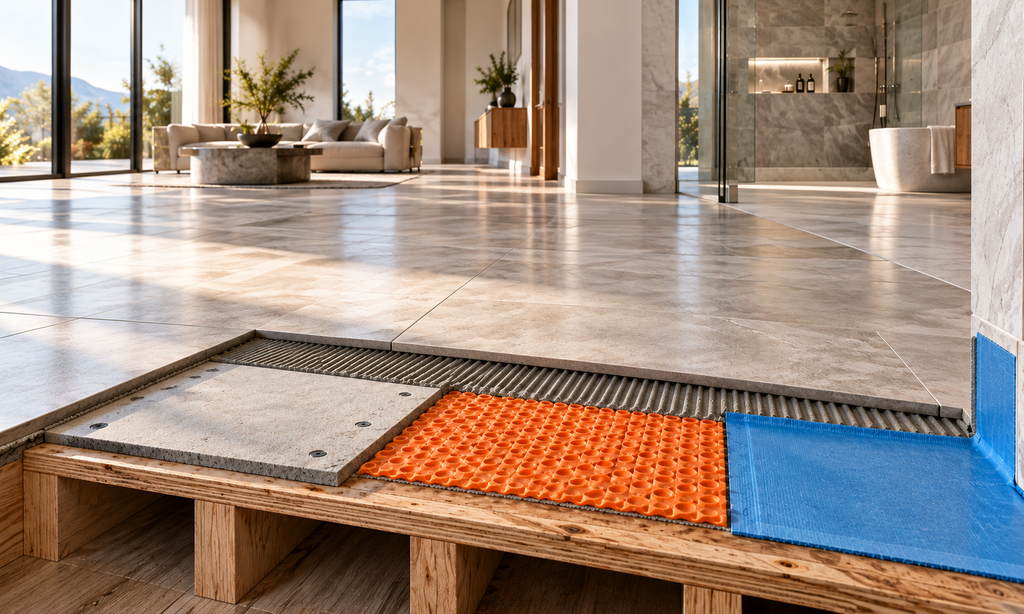
Rectified Porcelain Tile: What is rectified porcelain tile? It is simply tile that’s manufactured with all sides mechanically cut or ground after firing to achieve uniformity in size and shape. This process ensures that each tile is nearly identical, with perfectly straight, sharp edges that give way to tighter grout lines and a seamless appearance popular in modern and minimalist settings. Approved for both walls and floors, rectified tile requires careful installation to prevent lippage (uneven tile heights). The sharp edges are less forgiving of an uneven subfloor and will highlight any irregularities. An important point to note if a smooth, flawless installation is desired.
| Types | Features | Avg. Cost / Sq Ft |
|---|---|---|
| Glazed porcelain tile | Glaze-fused surface for a variety of colors and patterns | $3–$30 |
| Unglazed porcelain tile | Natural texture with a raw-earthy appearance | $2–$15 |
| Full-body porcelain tile | Uniform coloration and durability throughout the material | $3 to $10 |
| Rectified porcelain tile | Machine-cut edges for precise sizing and shaping | $12 to $20 |
Why Homeowners Love Porcelain Tile: Top Benefits
Now that we’ve covered the basics of the question “what is porcelain tile,” it is just as essential to explore the remarkable benefits it offers.
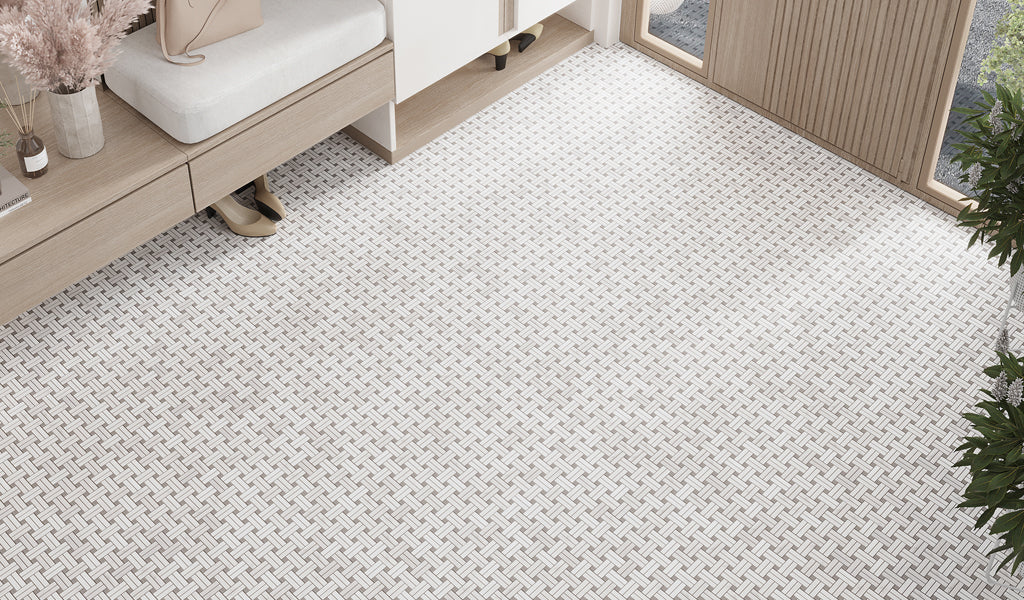
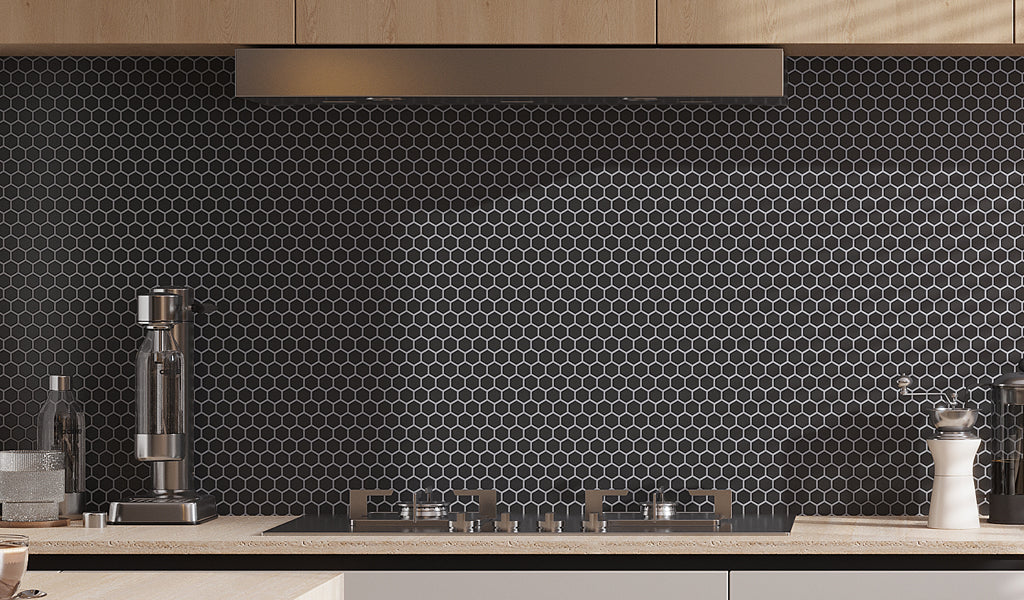
Wide Array of Styles: There’s so much to appreciate about porcelain tile, but the amazing variety in a single material is perhaps what stands out the most. This man-made material comes in just about any style you can imagine. Its flexibility makes for limitless creative possibilities, from interesting shapes like hexagons and stars and crosses to classic choices like rectangles and penny rounds. It’s also available in virtually every color, allowing for tailored spaces that are both timeless and of-the-moment.
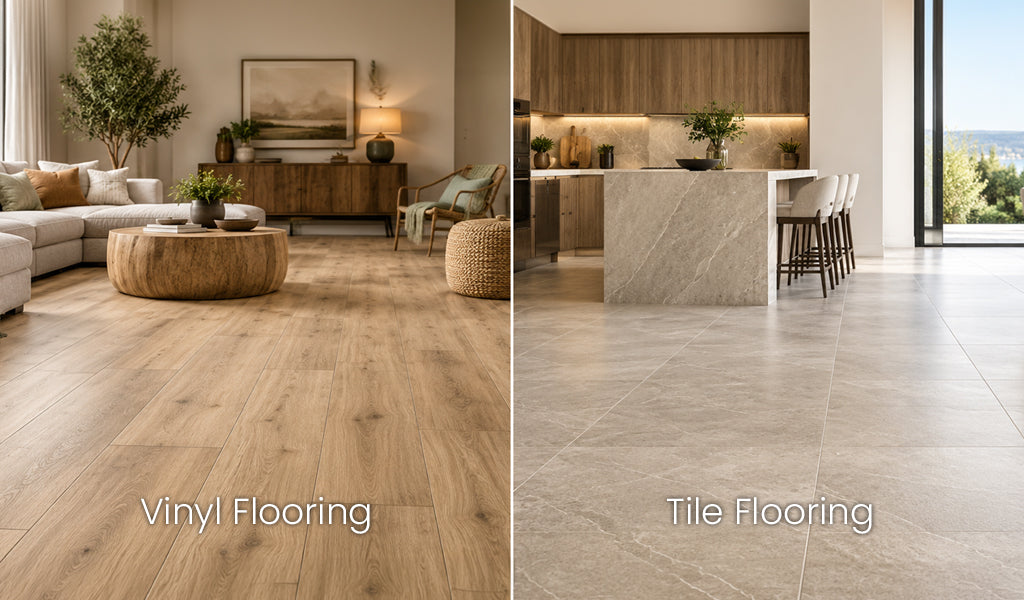
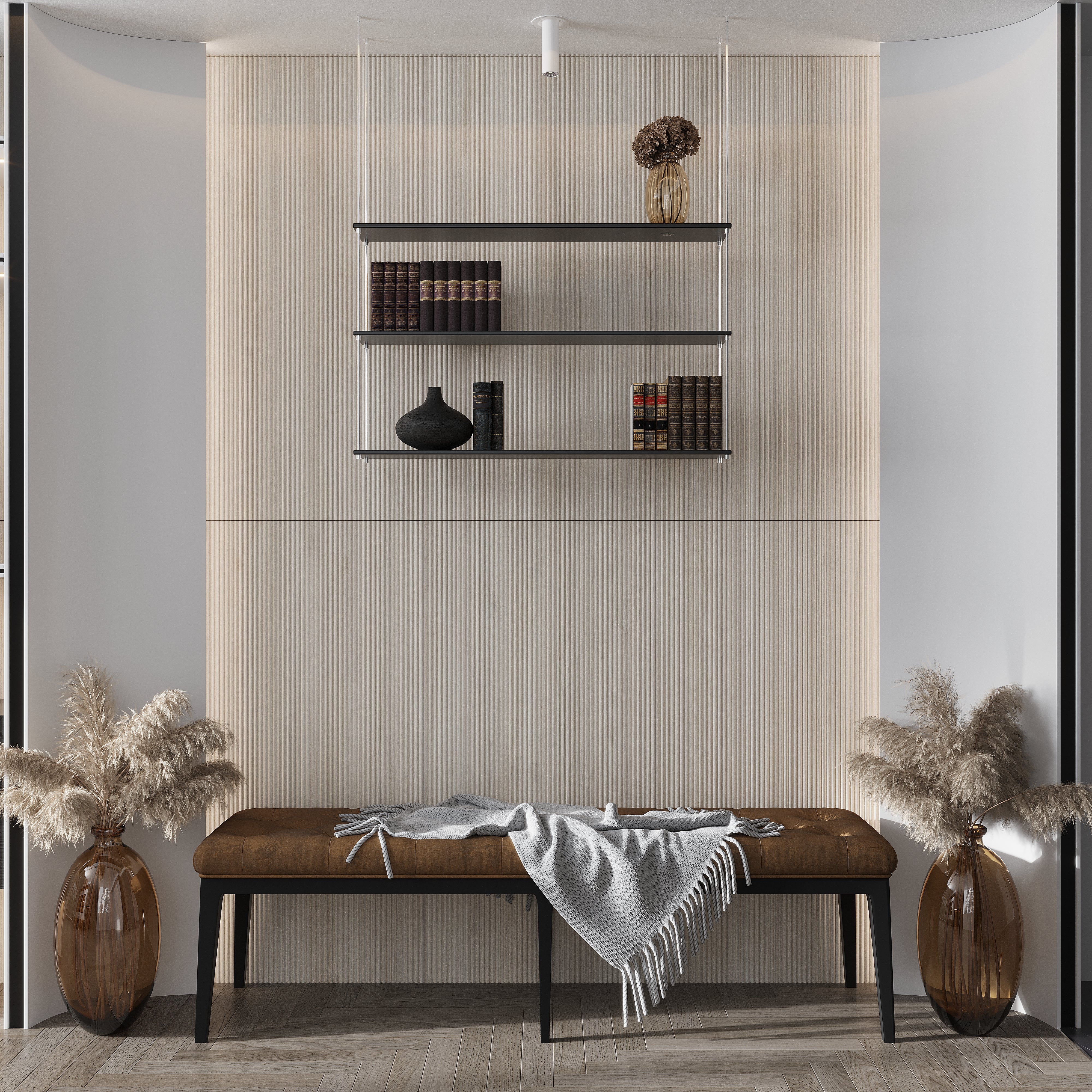
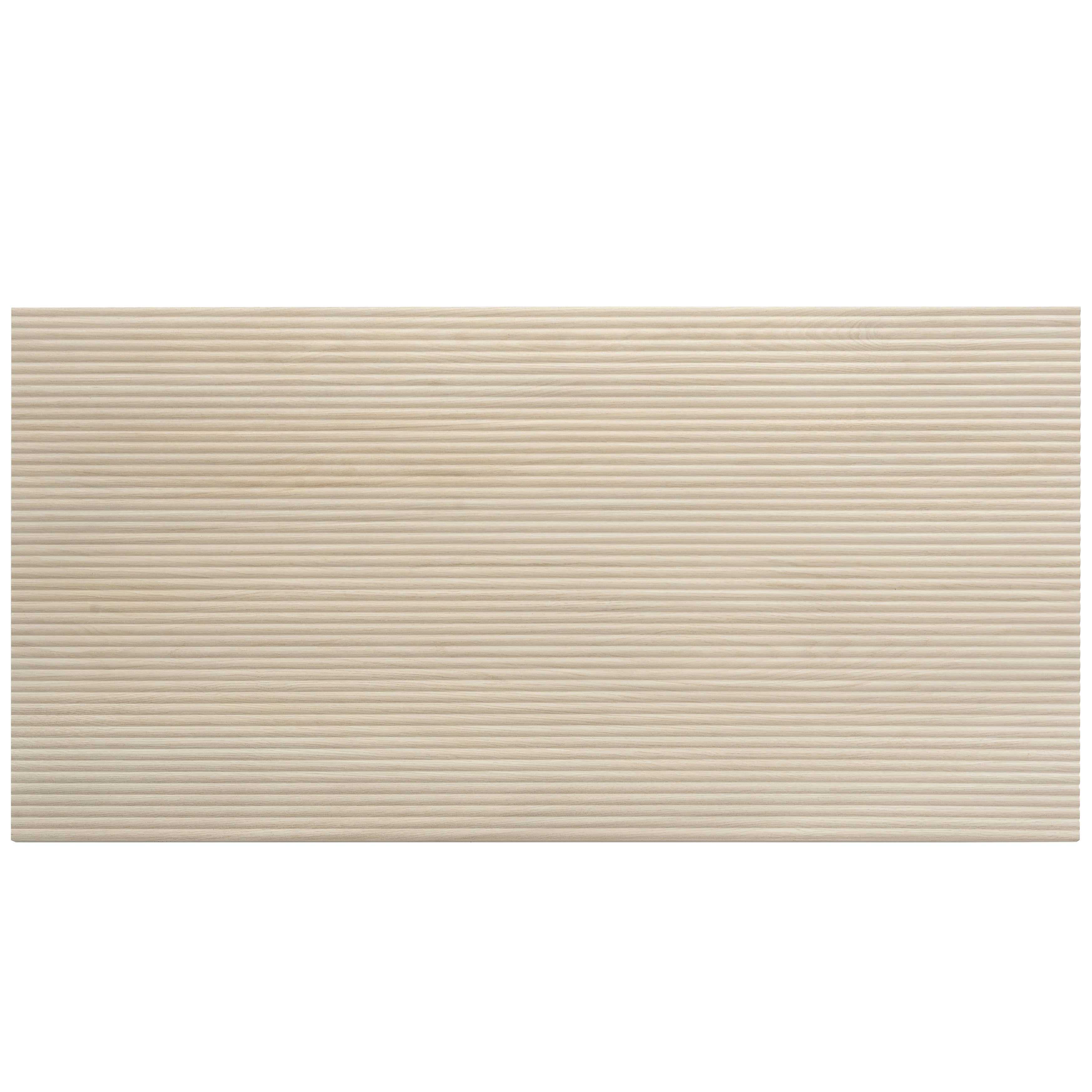
Replicates Natural Materials: Not everyone is looking to splurge. That’s why at Apollo Tile, we offer several types of porcelain tiles that emulate the appearance of natural stones, including slate and marble, as well as zellige, hardwood, terrazzo, and terracotta. Digital images can be printed onto unglazed porcelain that is then highly polished to create a realistic finish at a fraction of the cost. If you’re on a tight budget, our offerings fit the bill. A beautiful, modern bathroom, for instance, can be transformed with Natural Wood 24x48 Matte Fluted Porcelain Large Tile. Something that genuine timber can’t fulfill since it is sensitive to high-moisture and high-humidity environments.
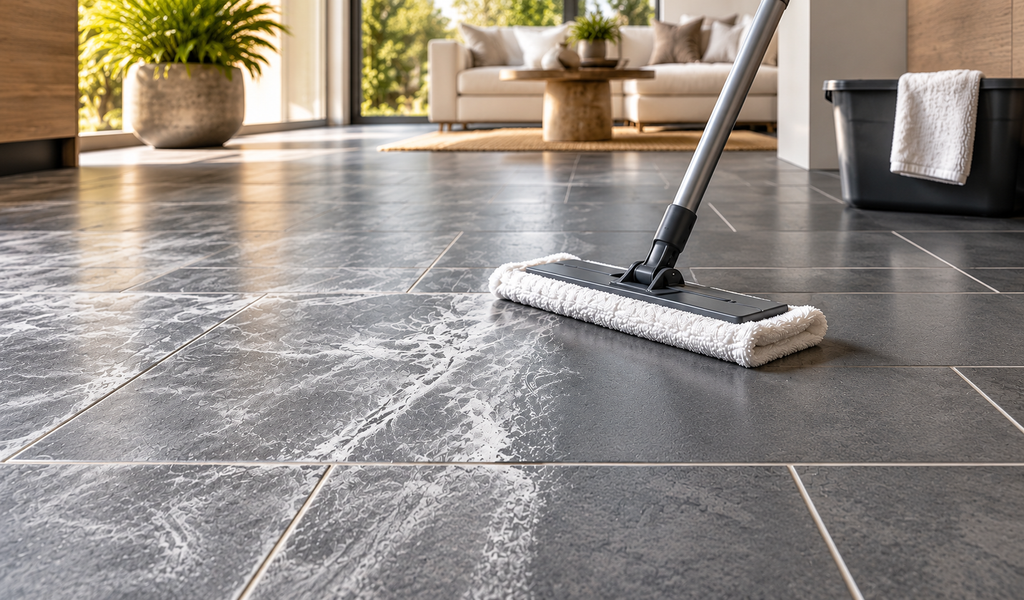
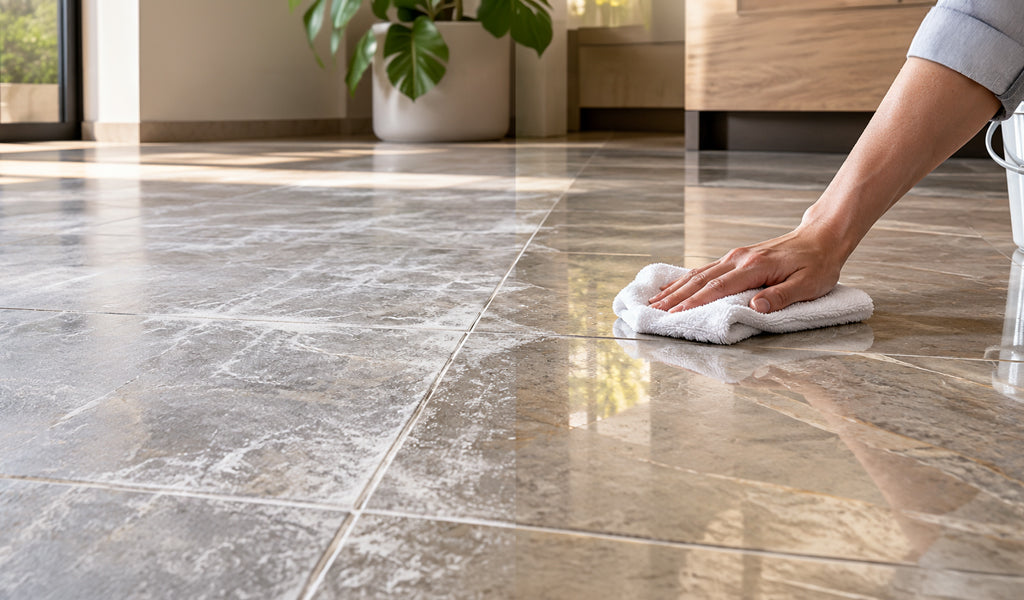
Stress-Free Care and Upkeep: It is impossible not to accumulate dust and dirt on any surface. Luckily, it can be easily cleaned without leaving a trace, making porcelain backsplash and floor tile a low-maintenance choice that makes life simpler. It does not harbor bacteria; therefore, no harsh chemicals or on-your-hands-and-knees scrubbing is needed. Regular light cleaning to keep its non-porous surface in tip-top shape is as easy as following these three steps:
- Sweep or vacuum to keep dust and dirt from collecting
- Wipe or mop with a solution of warm water and mild detergent
- Dry thoroughly using a microfiber cloth to prevent streaks
Durability You Can Trust: While color, pattern, and style are key, there are some functional qualities required for lasting surfaces. The thing to remember for high traffic and wet zones is that tiles need to be anti-slip, water-resistant, and tough enough to stand up to continual pressure. Porcelain’s technical superiority and longevity are unmatched. It has low porosity, is resistant to stains and scratches, and can endure bustling footsteps, backyard gatherings, and the most adverse weather conditions without marking or cracking. This robust body that handles these everyday scenarios rarely needs replacing and can last as long as the buildings it is installed in.
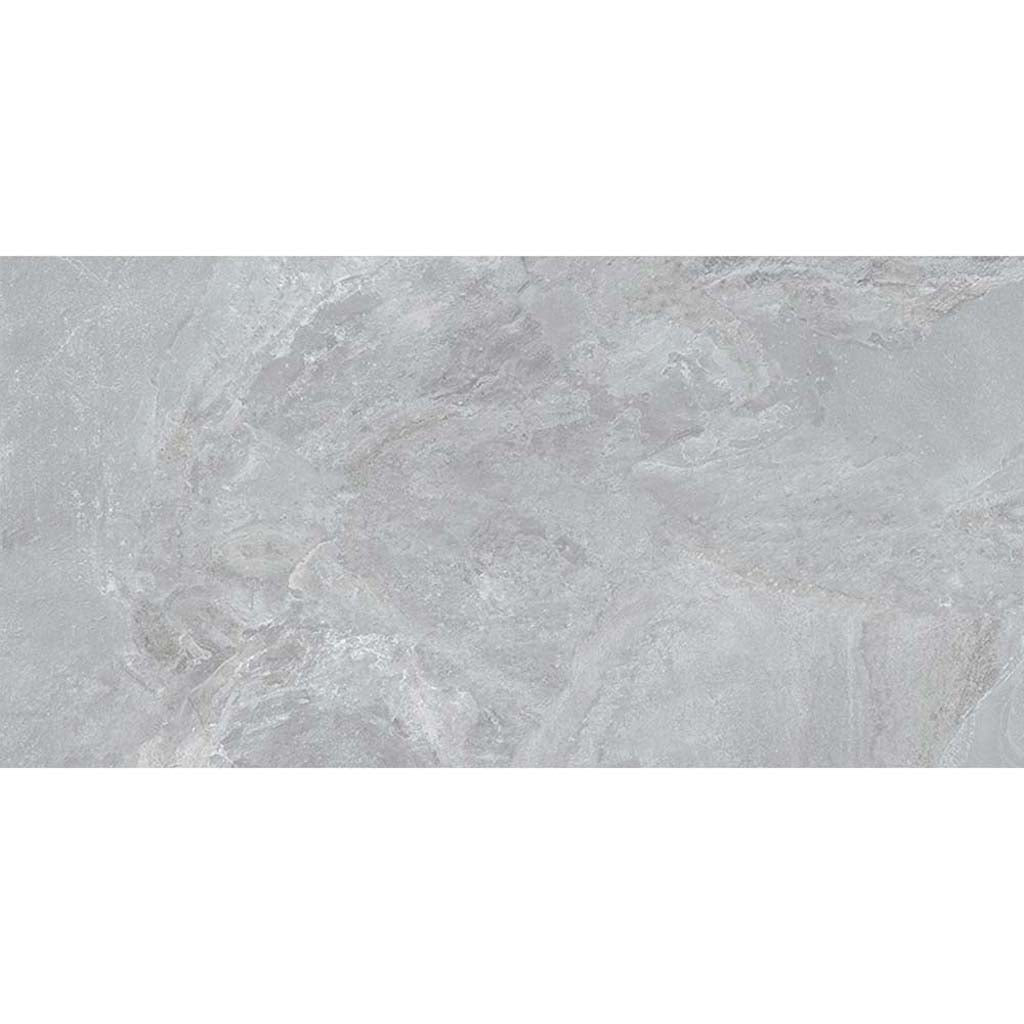
Taking this a step further, Apollo Tile’s Gray 24x48 Matte Porcelain Large Format Tile is an excellent example. At 10 mm thick, it offers dependable strength and stability, making it a smart, long-term solution for high-demand areas.
A Sustainable Choice: The green movement has hit the flooring market, and porcelain, made of natural clays and minerals, is an eco-friendly option that spans a complete life cycle. Production residue, such as water, dust, unfired scrap, and powder, is responsibly recovered and reused to minimize waste. So, it’s little wonder why it has the lowest carbon footprint and minimal impact on the environment among flooring options.
All-Around Design Value: The best materials are those that surpass expectations. While that’s not always easy to find, it’s undeniably the case with porcelain tiles. Health and hygiene benefits, minimal upkeep, versatile design and functionality, and sustainable qualities merge to deliver exceptional all-around value. Whether you seek a classic, contemporary, or bespoke look, it is such an easy choice to make!
Where to Use Porcelain Tiles for Maximum Impact
To make the most of your investment, it’s important to align your material selection with how and where it will be used. The use of porcelain walls and floors has become a defining trend in residential settings, offering homeowners outstanding technical performance and visually compelling surfaces. Kitchens, bathrooms, and living areas benefit from exceptional strength, moisture and stain resistance, and the ability to endure wear without compromise.
In addition, its depth of detail allows for a seamless flow between the indoors and outdoors, making it an all-encompassing solution that brings design continuity and comfort throughout the home.
Key areas where porcelain tile excels include:
- Kitchen backsplash and floors
- Bathroom backsplash and tub surrounds
- Shower walls and floors
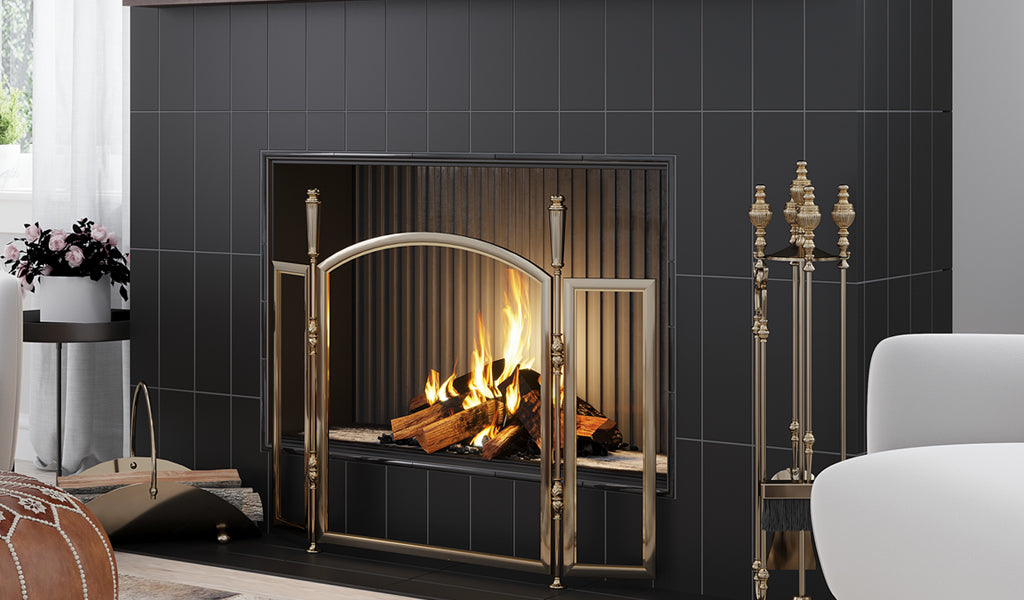
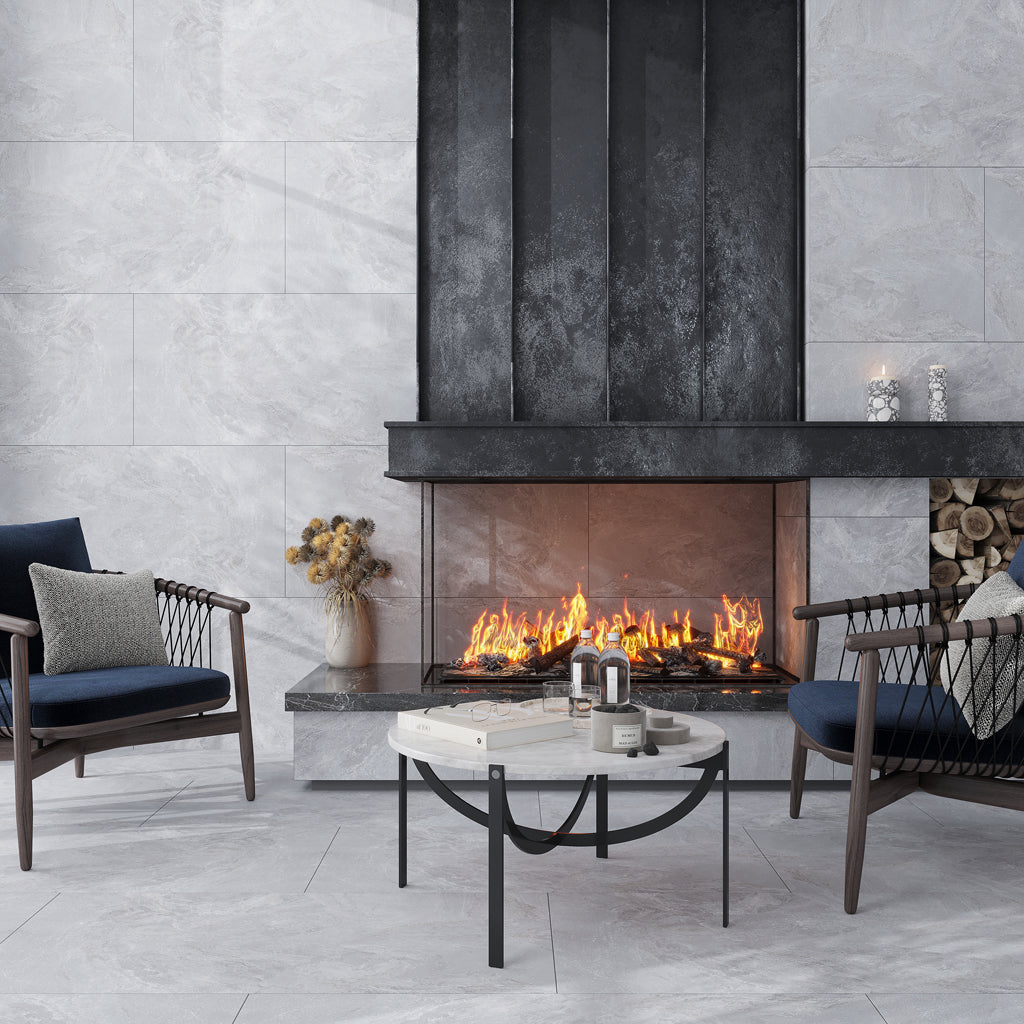
- Fireplace surrounds
- Entryway, living room, and hallway walls and floors
- Patio floors, walkways, swimming pool, and deck area
Design Tips for Using Porcelain Tile
If you want to add character and individuality and are tired of the same old tried and tested ideas, porcelain represents a great opportunity to be as creative as you wish.
Stone & Wood Look Tiles
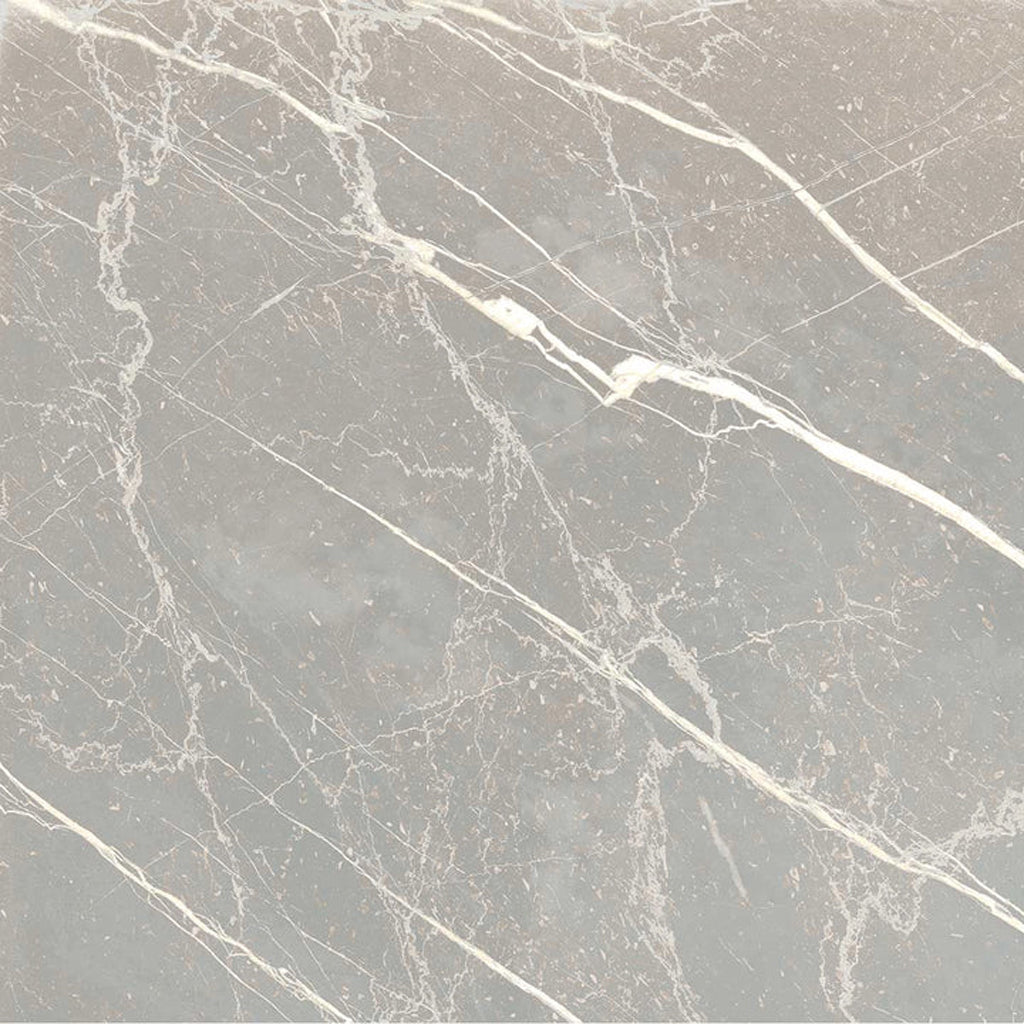
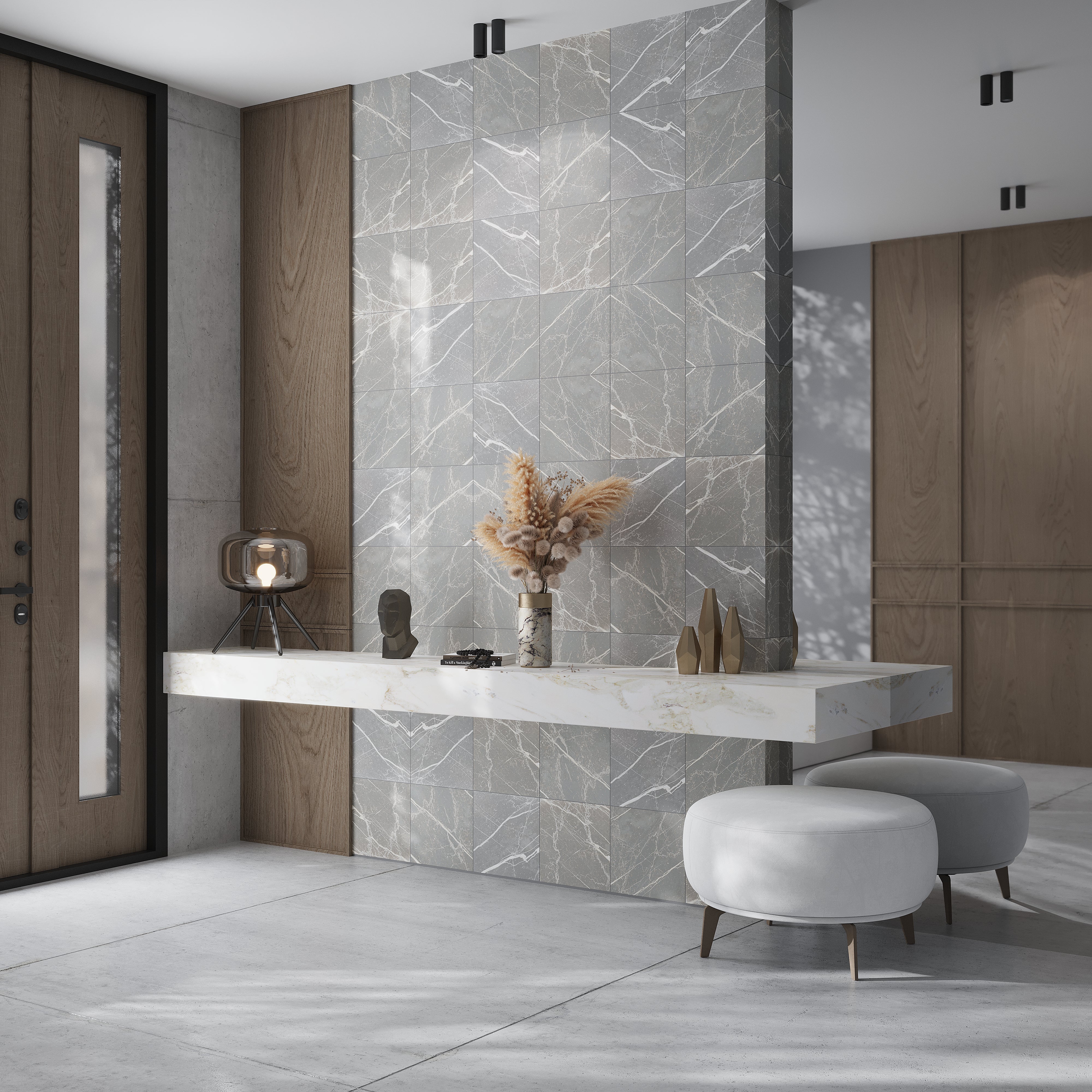
Its ability to mimic natural materials allows for premium interiors without the maintenance challenges. Using high-definition inkjet printing, porcelain captures the depth and movement of stone, marble, and hardwood with exceptional fidelity. This artistry is embodied by our Ash Gray 12x12 Matte Marble-look Vein Porcelain Tile, whose pronounced veining pattern feels unmistakably natural. So much so that it’s hard to tell it apart from real marble stone.
Large Format Tiles
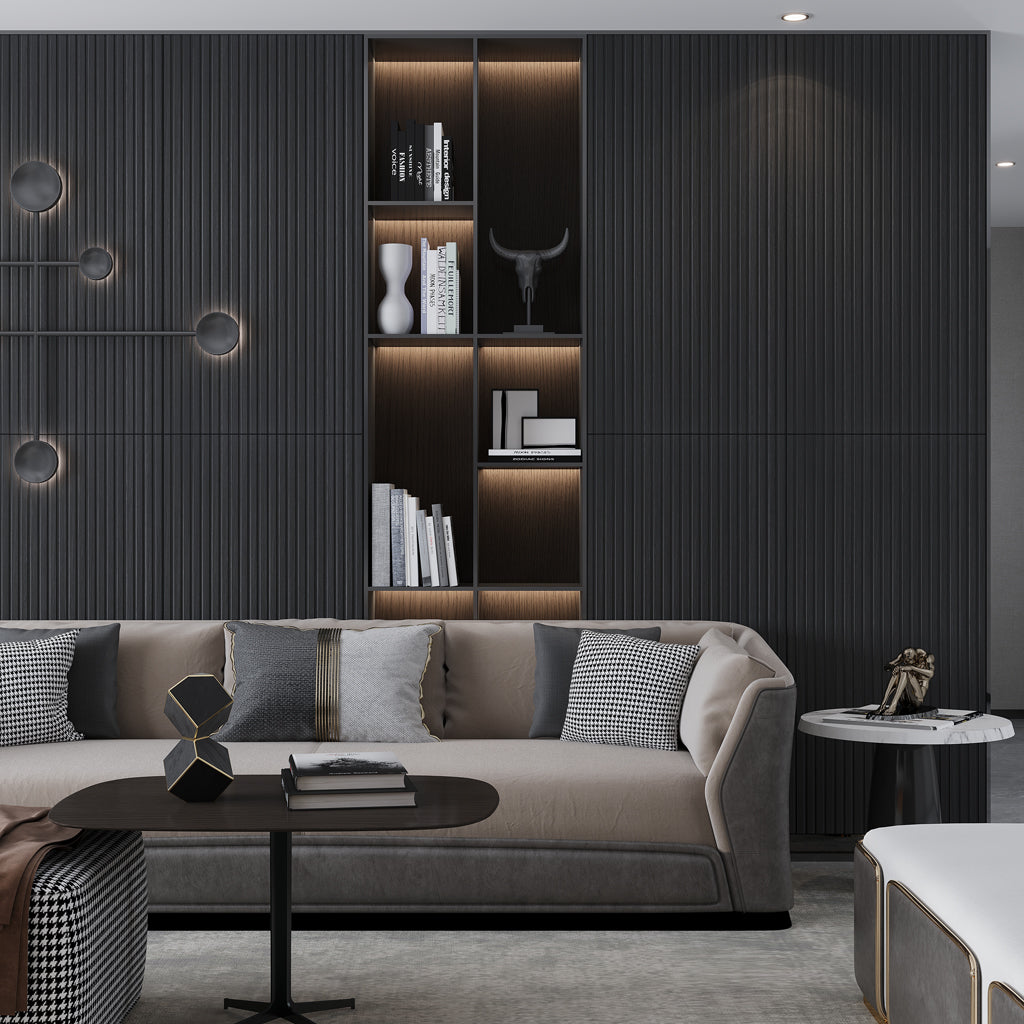
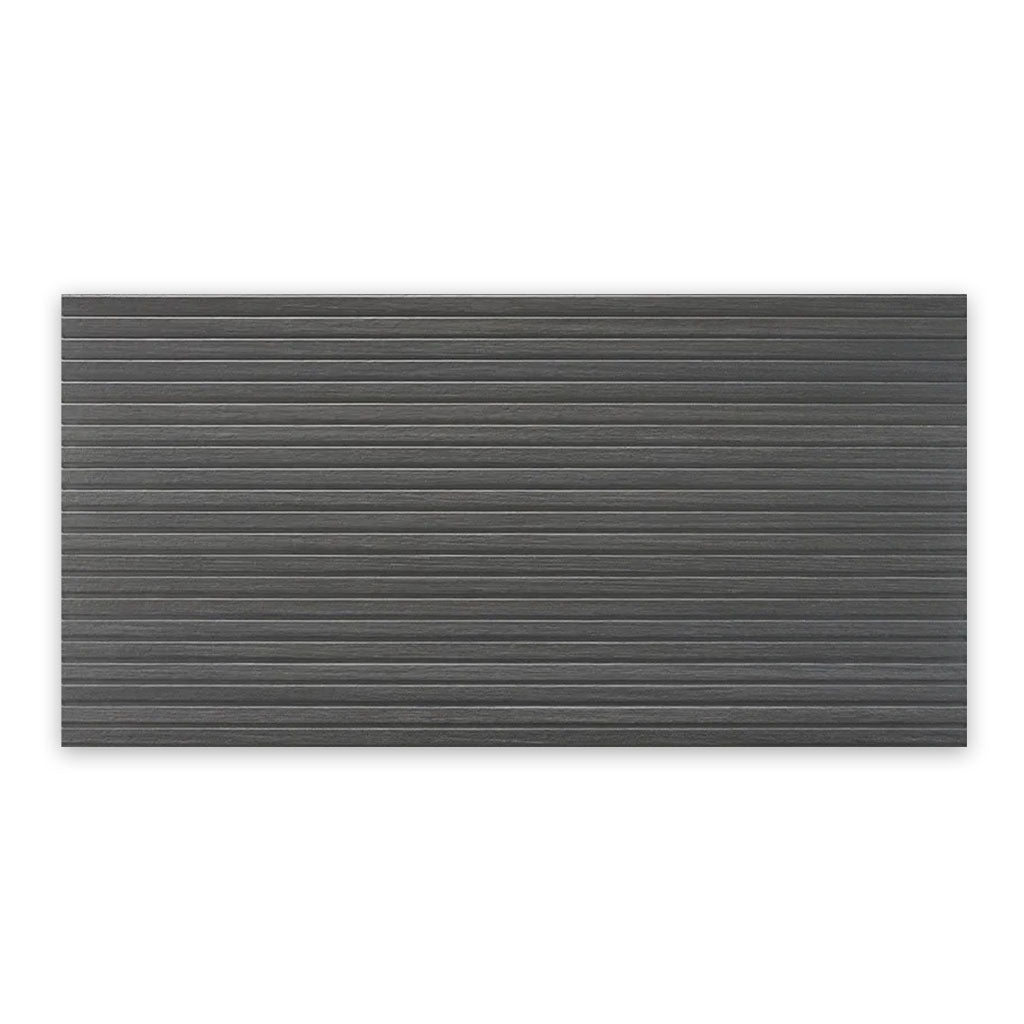
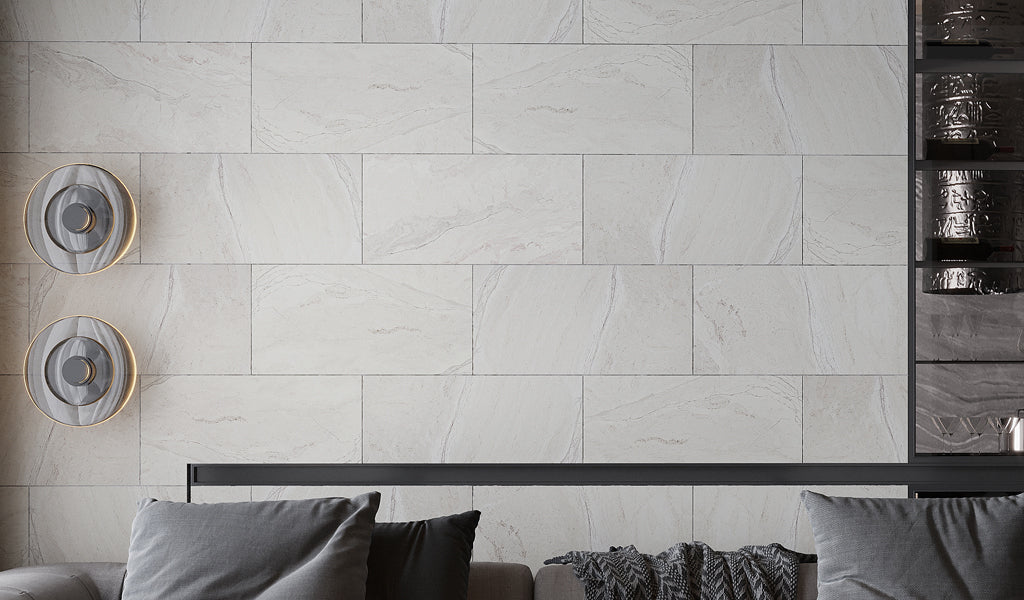
Tiles have transitioned beyond small standard sizing to a much grander scale. As wide as 48x48 inches, these larger pieces create a vastly different look that makes an area feel even more expansive. Rectangular formats are also making a splash, with 36x36 and 24x48 tile becoming a popular choice for modern interiors.
Pro Tip: Opt for neutral shades or minimalist patterns when using large-format tiles to keep the look timeless and sophisticated.
Bold & Patterned Tiles
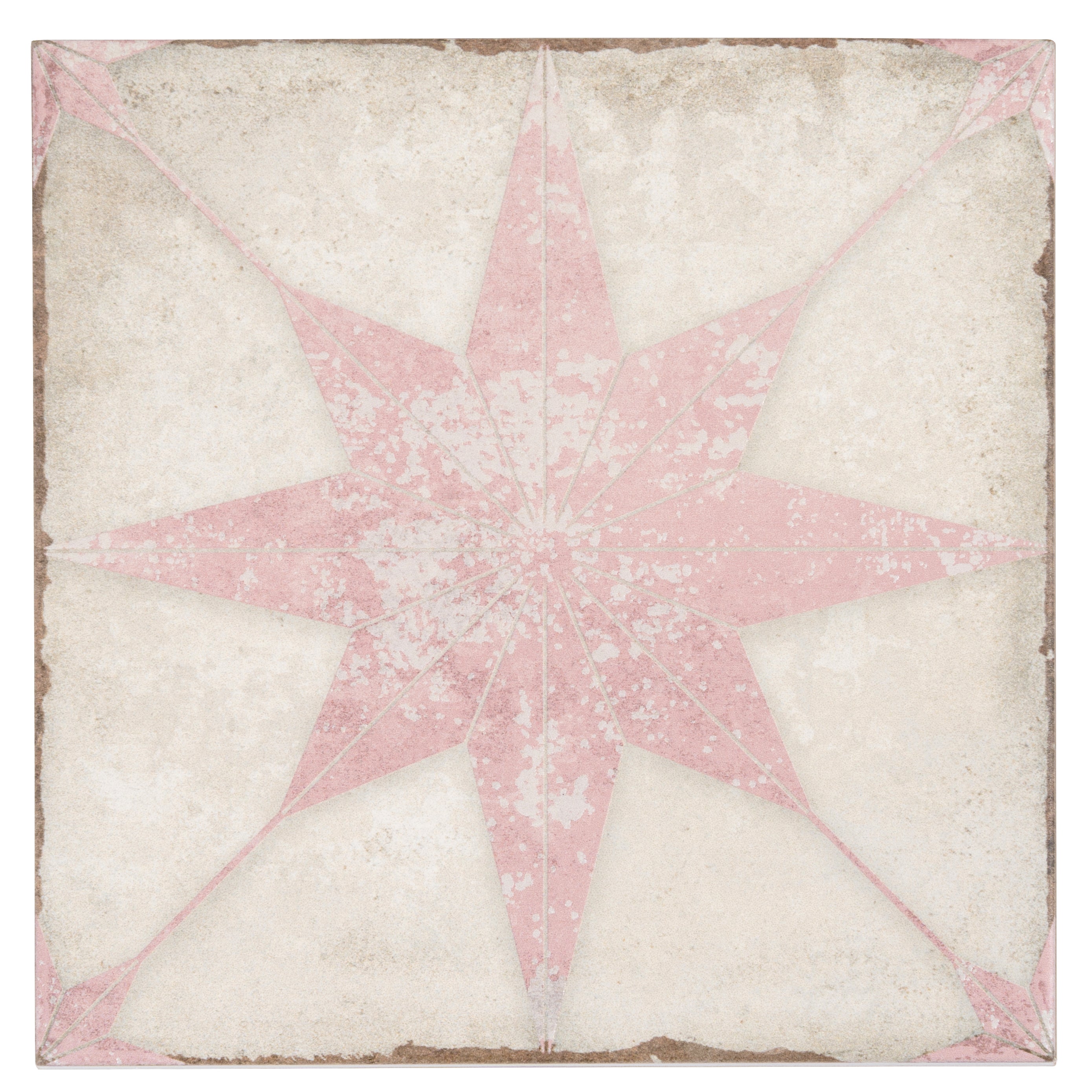
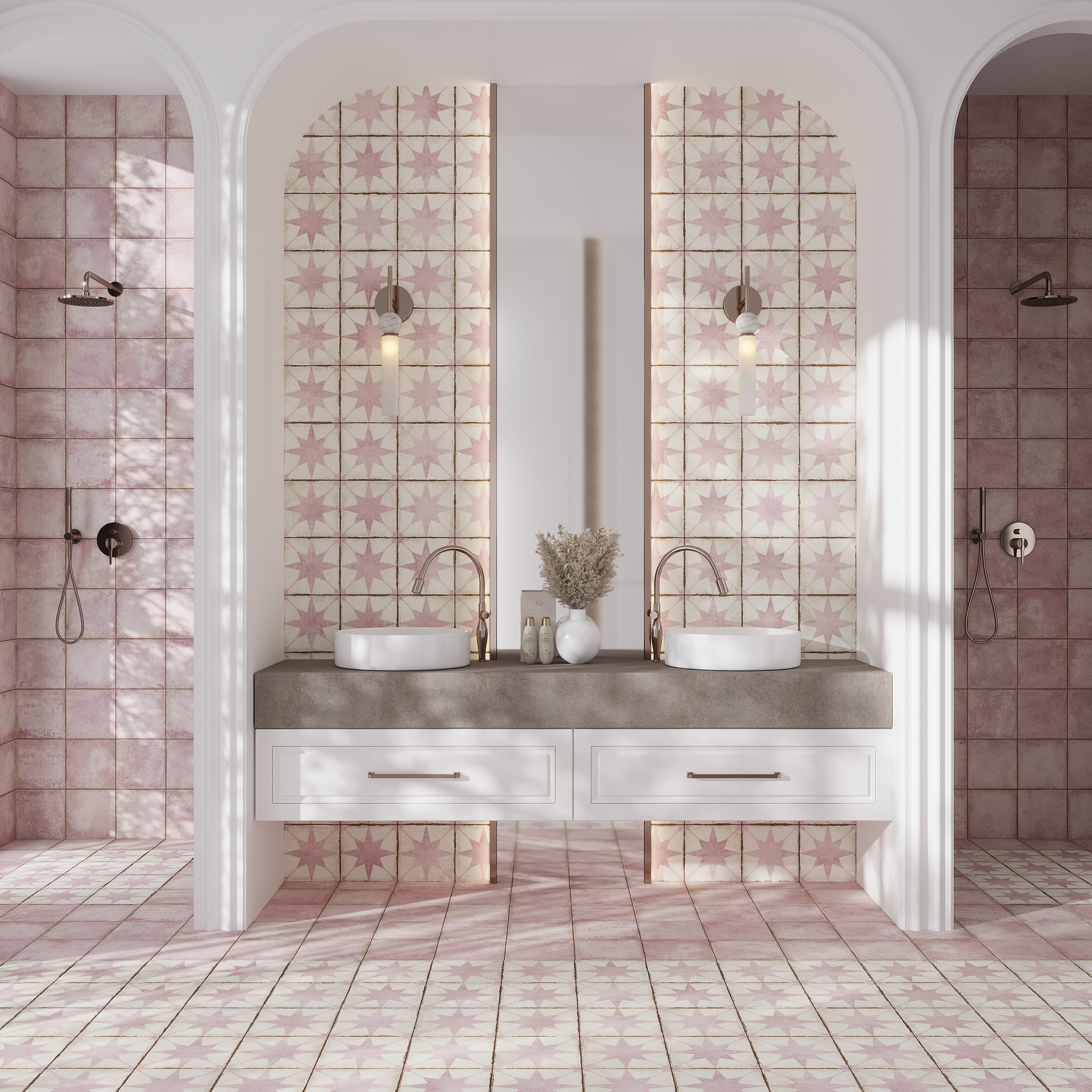
If your style is more eclectic, don’t be afraid to experiment with vibrant colors, geometric patterns, and intricate mosaics. Porcelain tiles offer a wide range of options, and one that has been all the rage is star and cross. The interlocking pattern is a fun way to wow and bring a sense of story to a space. Or you could flirt with the idea of Saltillo-look tiles, which truly know how to turn ordinary surfaces into striking statements.
Terrazzo-Inspired Tiles

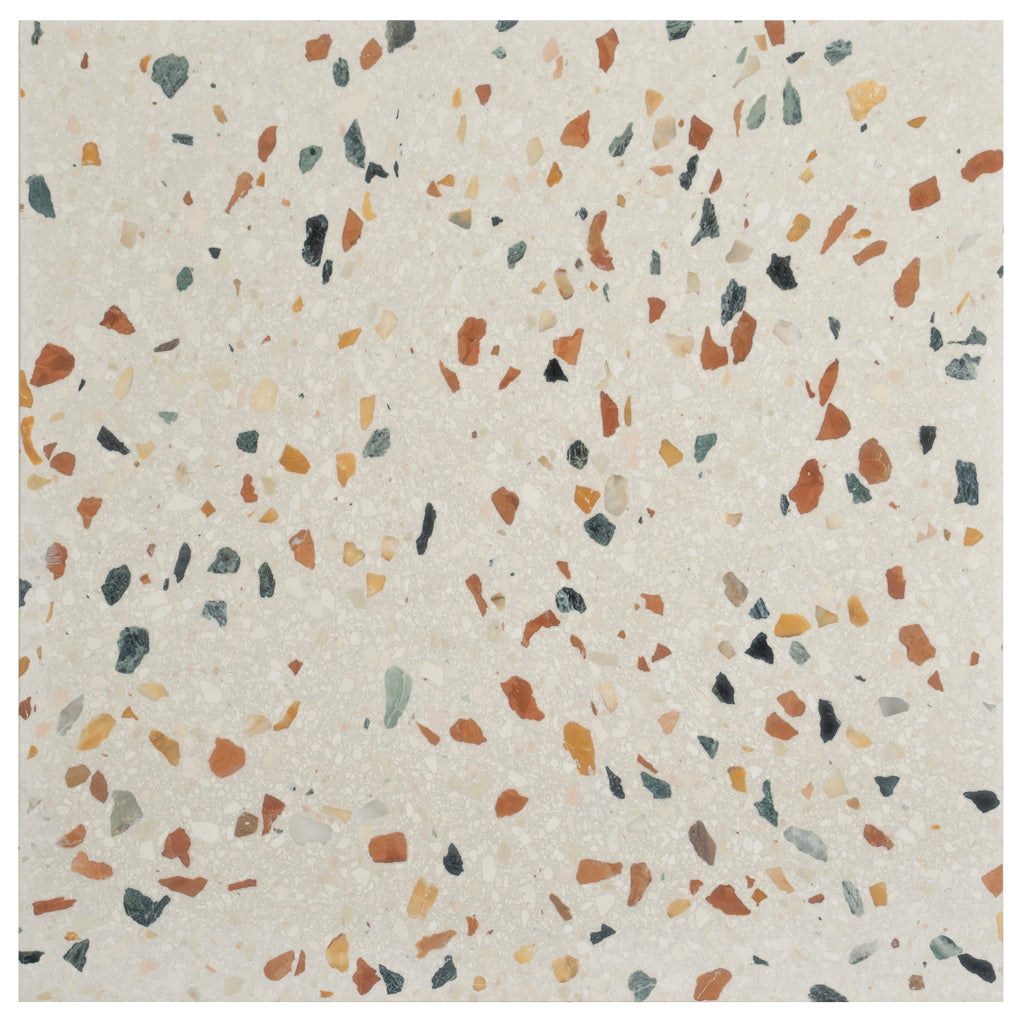
Once a Mid-century favorite, terrazzo-look porcelain tile is being updated with vibrant color palettes, eye-catching flecks, and creative placements that work across larger, open-plan rooms where you can really go for that all-over effect. Big, bold, and beautiful, our Beige Gold 24x24 Honed Square Terrazzo Large Format Tile is a conversation starter, with distinctive shards that pack a real design punch.
Moroccan-Inspired Zellige Tiles
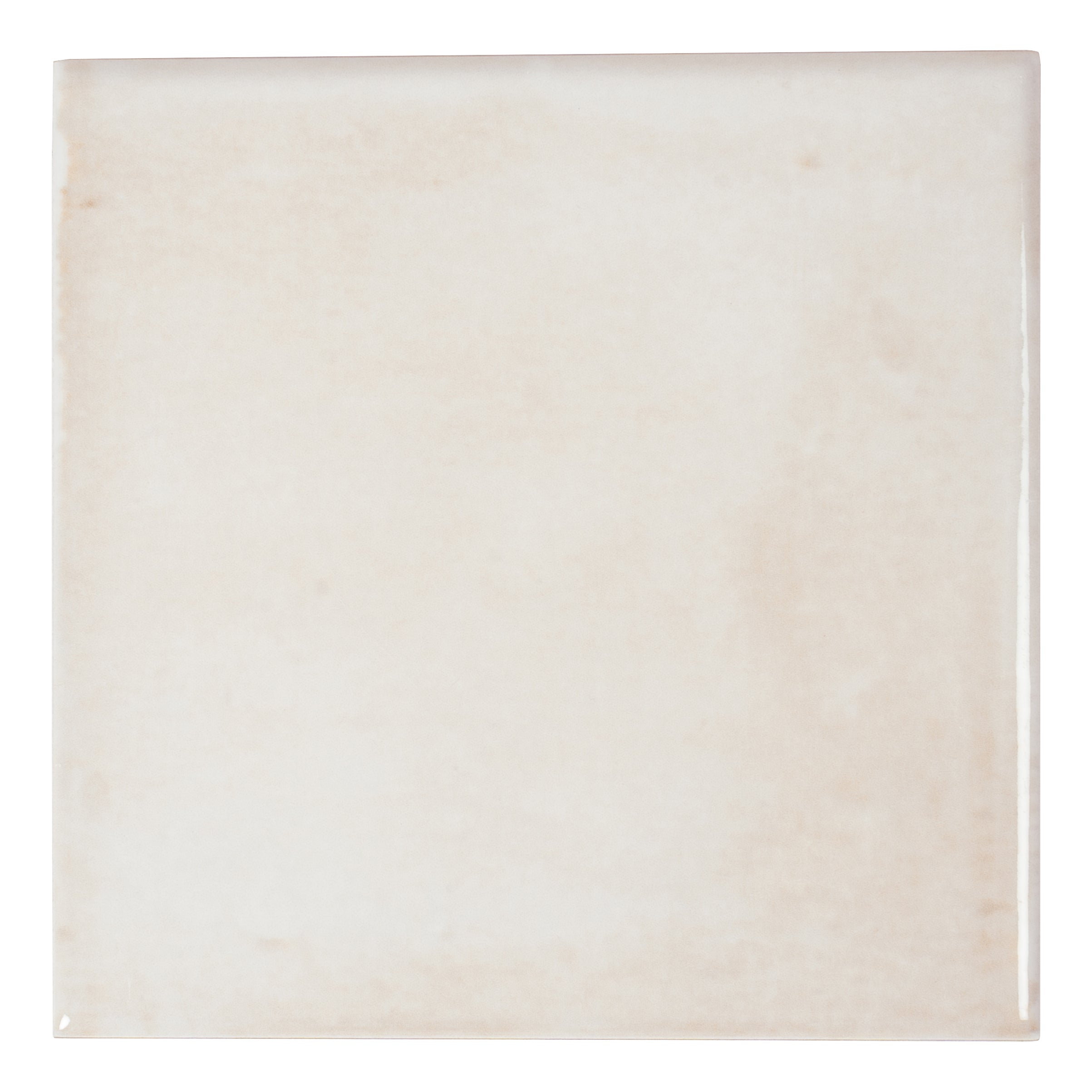
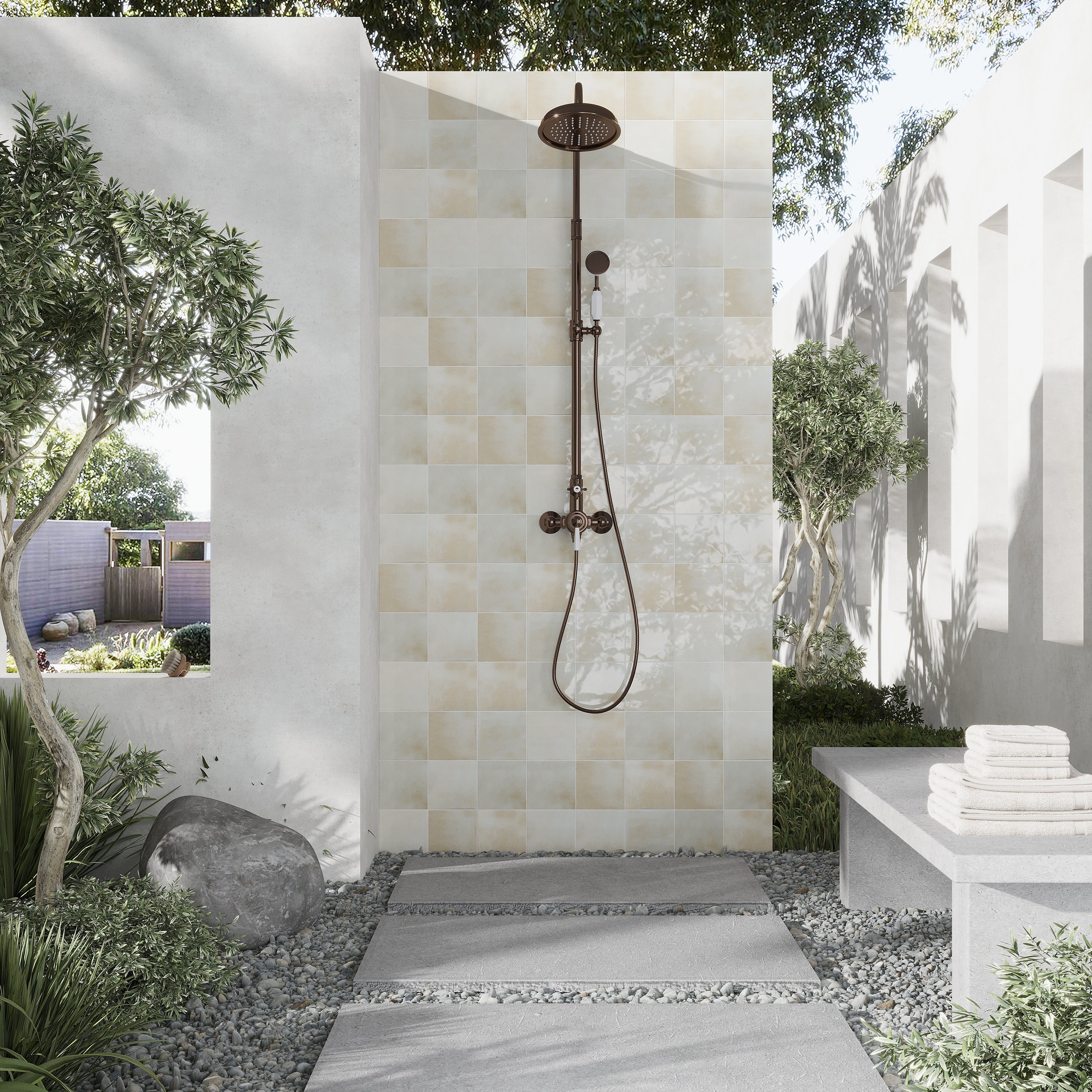
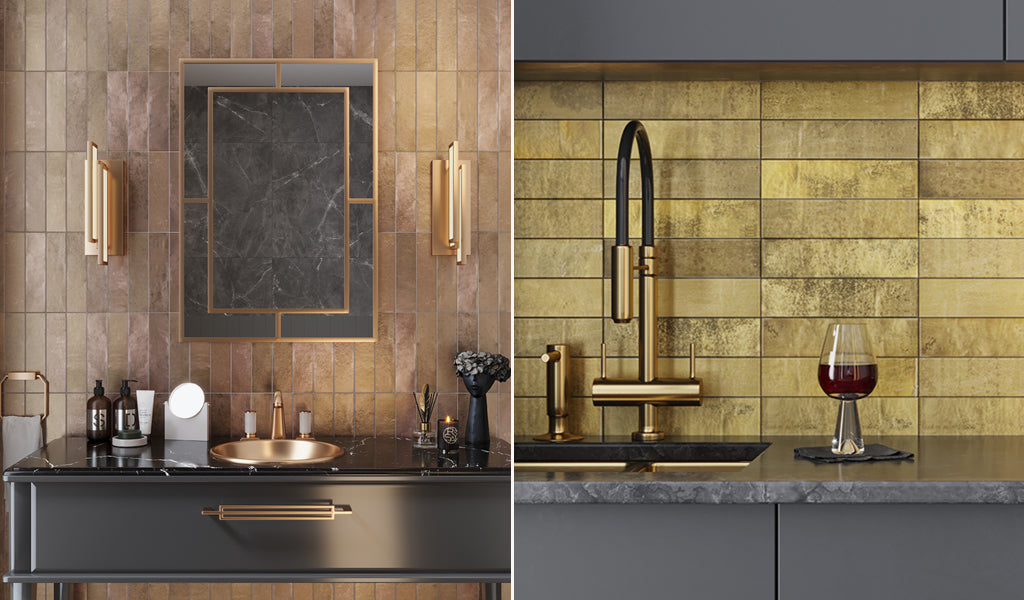
Every material has a history, and centuries-old Zellige tiles need no introduction. Their lavishly applied glaze and uneven edges give them a distinctive presence. In porcelain form, they’re full of crafted charm that mimics the look and feel of the originals. Take, for example, our Creamy off-white 6x6 Glossy Zellige Square Porcelain Tile, whose restrained color palette allows the handmade quality to remain the focus. Versatile across the board, it appears in spaces ranging from kitchens to courtyards to outdoor showers.
Conclusion
After exploring what is porcelain tile, including its benefits, types, and design adaptability, the verdict is clear: it is a versatile and strong material of choice. High durability, impact resistance, and low water absorption make it ideal for kitchens, bathrooms, living areas, and outdoor spaces. When properly installed and cared for, these wall and flooring tiles can last over 50 years, offering exceptional value. The deal is really that simple: you can live out your dream style and bring visual richness to your space without sacrificing performance, simply by choosing porcelain tiles.
So don’t leave your design project to chance. Explore Apollo Tile’s collection today and consult with our tile experts to bring your dream design to life. Subscribe to our newsletter and enjoy a 5% discount on your next order!