

Vinyl Flooring vs. Ceramic and Porcelain Tile: Which Is Right for Your Space
Sep 23, 2026 6 minute readIf you’re exploring new flooring for your project, you’ve probably realized there’s no shortage of options. Tile and vinyl are popular flooring materials, each offering a unique combination of style and performance. Porcelain and ceramic floor tiles stand out for their durability, lasting value, and easy upkeep, available in myriad designs that mimic wood, stone, concrete, and other natural materials. But how do they measure against vinyl, and which choice is right for your space? Let’s dive in as we compare vinyl flooring vs ceramic tile and porcelain tile so you can make an informed decision for your space.
Key Takeaways
- Vinyl flooring offers convenience and easy installation, while ceramic and porcelain tile provide exceptional durability and long-term performance.
- While all three flooring types offer versatile style, porcelain and ceramic tile deliver a more authentic look and lasting value.
Which Flooring Can Stand Up to Everyday Wear and Tear
Wear resistance indicates how well flooring handles the everyday demands of your home, from constant foot traffic to scratches and accidental impacts. So, how do porcelain and ceramic tile vs vinyl flooring compare? Ceramic and porcelain are strong contenders for heavy-use areas, thanks to their incredible durability. Porcelain floor tile, in particular, takes the edge with its dense, hard-wearing, and abrasion-resistant surface that handles the chaos of daily life.
Vinyl flooring, though durable, doesn’t quite match the long-term hardness and resilience of tile. Sure, it can handle daily activity, but accidental impacts and heavy furniture can dent vinyl, and sharp objects can cause scratches.
When weighing vinyl vs porcelain tile, you’ll realize that the former doesn’t fare well outdoors. Standard vinyl flooring isn’t designed for extreme temperature swings and fades under prolonged sunlight exposure. In comparison, porcelain makes a superior outdoor and garden tile, able to stand up to the elements and maintain its quality and color clarity even after years of use.
How Do the Three Options Compare for Water and Moisture


In areas exposed to water and moisture, all 3 flooring options have their unique merits. Bathroom flooring tile is a classic choice, with porcelain absorbing little to no water. Ceramic tiles such as Tea Green 2x10 Matte Picket Ceramic Tile can go on vertical surfaces and shower floors. Tile doesn’t require sealing, allowing you to enjoy the beauty of your installation with minimal upkeep.
Vinyl flooring is also water-resistant and can be a practical choice for bathrooms, kitchens, laundry rooms, and other moisture-prone areas. Over time, however, water can seep into the seams, leading to curling or warping.
Which One Is Easier to Install and Maintain

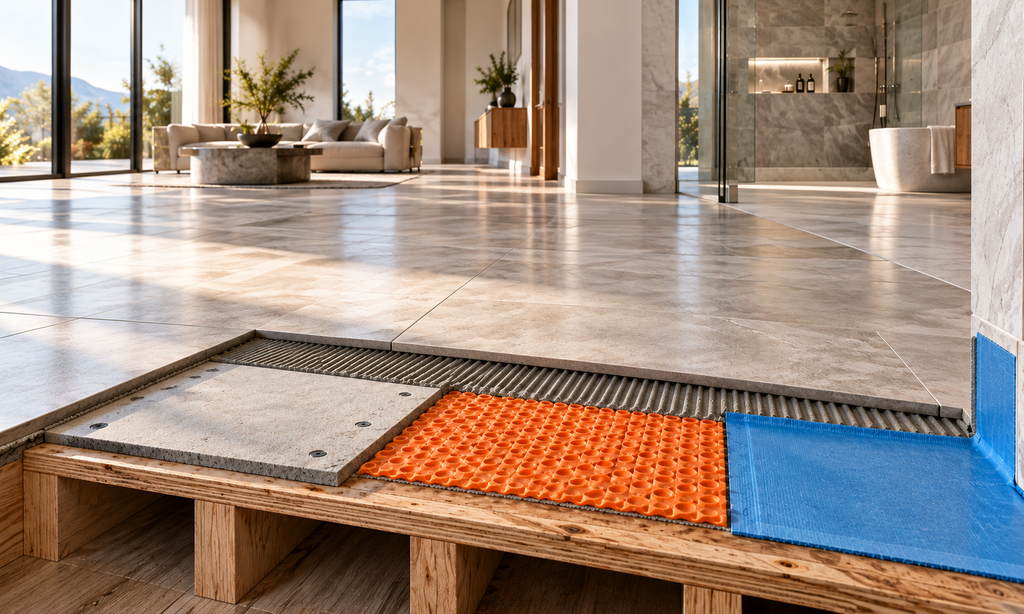
When comparing vinyl flooring with porcelain and ceramic tile, each material offers different installation methods. Vinyl flooring can be installed using peel-and-stick, click-lock, or glue-down methods, depending on the product. Porcelain and ceramic tiles are installed using suitable mortar or tile adhesive, followed by grouting. All three options require a clean, flat, and stable base for proper installation and a durable, attractive finish.
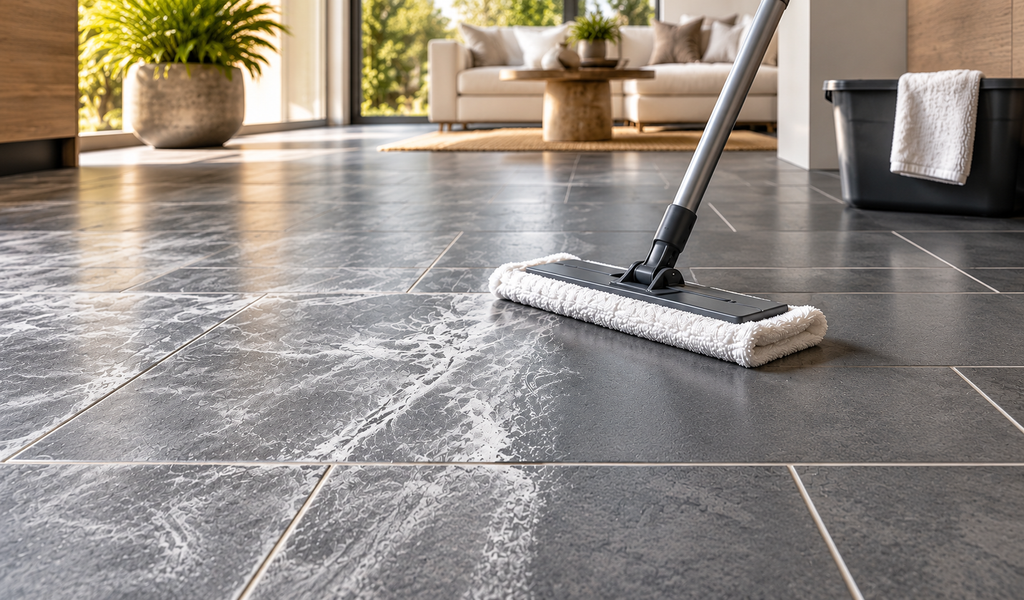
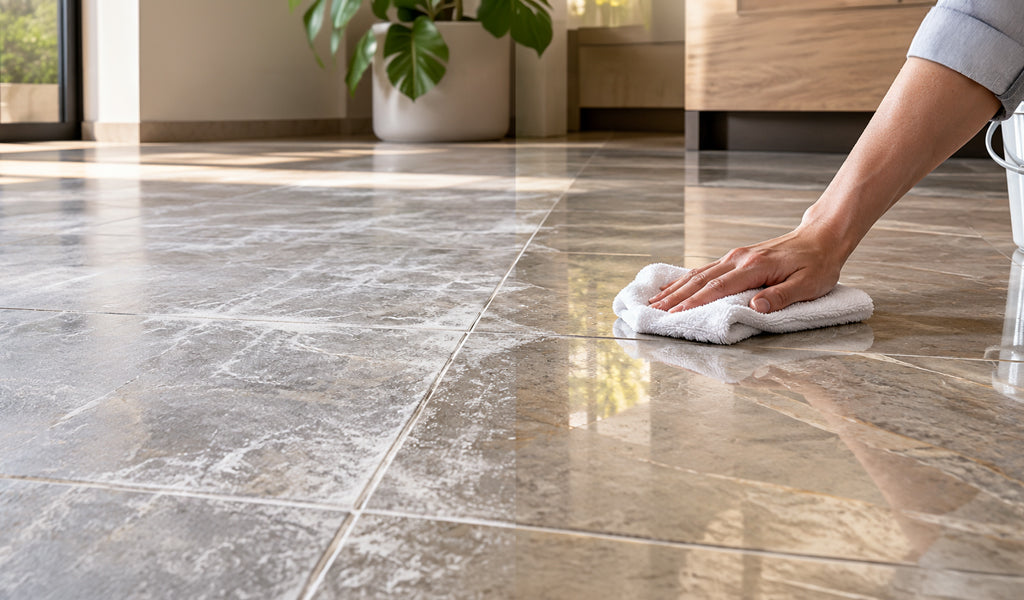
Maintenance is another area where tile stands out. Both ceramic and porcelain, be it kitchen, bathroom, or shower tile, require minimal upkeep and no sealing. Their resistance to stains, mold, and allergens gives them an advantage, requiring only regular sweeping and occasional mopping. Vinyl flooring is relatively easy to maintain but can be damaged by certain harsh chemical cleaners.
How Different Can Vinyl, Ceramic, and Porcelain Look


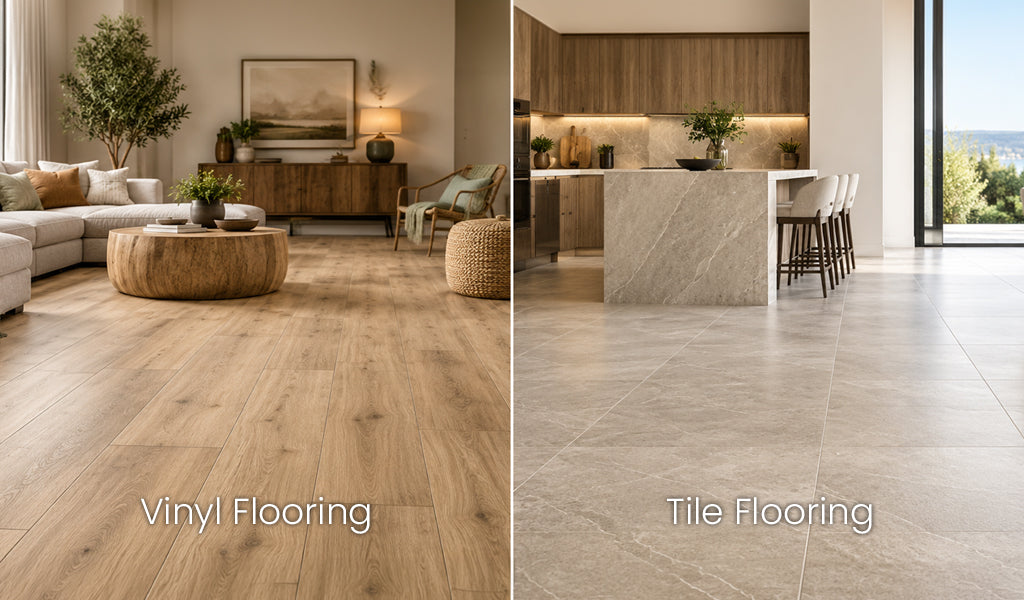
Ceramic and porcelain tile vs vinyl flooring in terms of style: all three materials offer plenty of room to match your personal taste. Vinyl is available in sheets, planks (luxury vinyl plank or LVP), or tile (luxury vinyl tile or LVT) and can mimic wood, marble, and even ceramic tile. That said, the illusion lacks the depth and texture that real materials possess.
For flooring with individuality and character, ceramic and porcelain take the lead. High-quality manufacturing delivers an impressive range of colors, patterns, textures, and finishes suitable for living room, kitchen, and bathroom floor tile ideas. Glazed ceramic tiles have an inherent splendor that vinyl flooring struggles to replicate.
Porcelain that simulates terrazzo, terracotta, and natural stones like marble, slate, travertine, and onyx offers a more authentic appearance, so much so that it’s sometimes hard to tell it apart from the real thing. A perfect example is our Black 36x36 Lappato Square Porcelain Large Format Tile, which features a visual effect reminiscent of natural onyx stone. This sense of distinctiveness resonates with diverse interior design styles, from classic to contemporary and everything in between.
Which Flooring Feels Better Underfoot
How do vinyl vs ceramic tile and porcelain flooring compare in terms of comfort? Underfoot, vinyl flooring feels comfortable, making barefoot moments pleasant. In hot climates, tile is wonderfully cooling. Even better, it is compatible with heated flooring systems, creating a cozy feel underfoot.
When Should You Choose Vinyl, Ceramic, or Porcelain Tile?
As you weigh vinyl flooring vs ceramic tile and porcelain tile, consider the material’s long-term value and your design goals.
-
Vinyl Flooring
Vinyl flooring offers convenience, affordability, comfort, and low maintenance.
-
Ceramic & Porcelain Tile
Ceramic and porcelain tiles are a premium choice if you’re after a “forever” design. They excel in durability, water resistance, and low upkeep, and present plenty of design flexibility thanks to a wide array of styles.
Conclusion
When weighing vinyl flooring vs ceramic tile and porcelain tile, consider your design goals, lifestyle, and performance requirements. The right finish underfoot should work beautifully for your space and complement the way you live. If you’re creating a forever home, ceramic and porcelain’s outstanding durability, long-lasting value, and premium look make them a worthwhile investment.