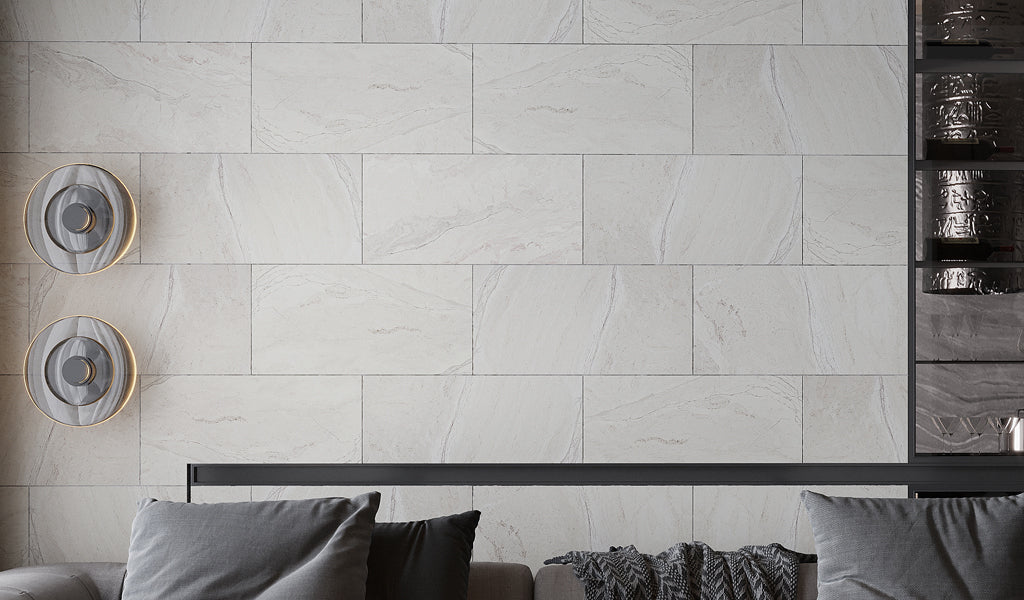


How to Clean Shower Tiles Without Damaging the Finish
Jun 17, 2026 10 minute readMaintaining your bathroom should not be an exhausting experience; however, when soap scum, stains, and mold accumulate, the beautiful appearance of your tiles can become a thing of the past. For those who have been trying to figure out how to clean shower tiles properly, this is the right place. The trick doesn’t only require cleaning but also preserving the finish so that your tiles remain pristine. Whether your shower tile is made of porcelain, ceramic, glass, or stone, you will learn how to maintain your tiles the correct way.
Key Takeaways
- Regular cleaning of tiles in your shower area prevents accumulation of soap scum, mold, mildew, and stains.
- Proper cleaning methods, use of natural products, and regular maintenance can keep the shower area looking good without affecting the finish of the tiles.
Step-by-Step: The Easiest Way to Clean Shower Tiles

The best way to clean tile shower surfaces without complicating matters is to follow this easy process. Whether you are cleaning shower walls or floors, or learning how to clean a walk-in tiled shower, this method is simple yet highly effective.
1. Rinse with warm water
Start by rinsing the tiles with warm water to loosen up soap, dirt, body oil, and other impurities that might have accumulated on the shower wall or floor tile. Focus particularly on corners, groutlines, and textured shower floor tiles since these areas usually accumulate more grime than other areas.
2. Apply a cleaning agent
Clean using a cleaning agent, either a commercial cleaning solution or a homemade one, which we will discuss later on. Allow it to sit for 5 to 10 minutes so it can dissolve any buildup.
3. Scrub gently
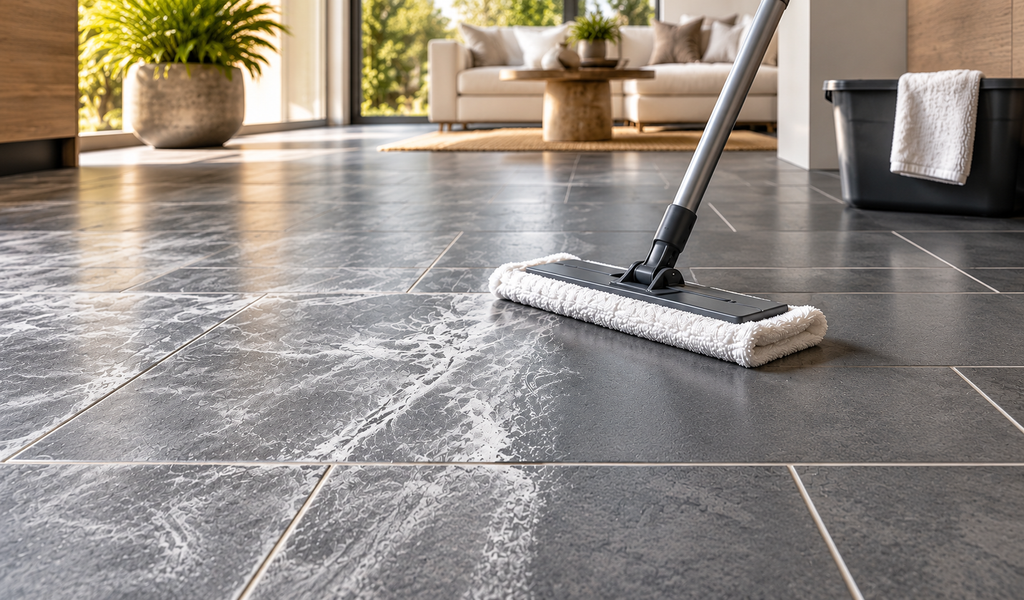
To properly clean shower wall tile, use a soft sponge or microfiber cloth and apply circular motions to avoid damaging the finish of your tiles. For the floor, a better option is using a soft-bristle brush for cleaning. Floors tend to collect more dirt than walls due to their constant contact with water. Avoid abrasive scrubbers, especially on polished porcelain, ceramic, glass, or natural stone tiles.
4. Rinse and dry
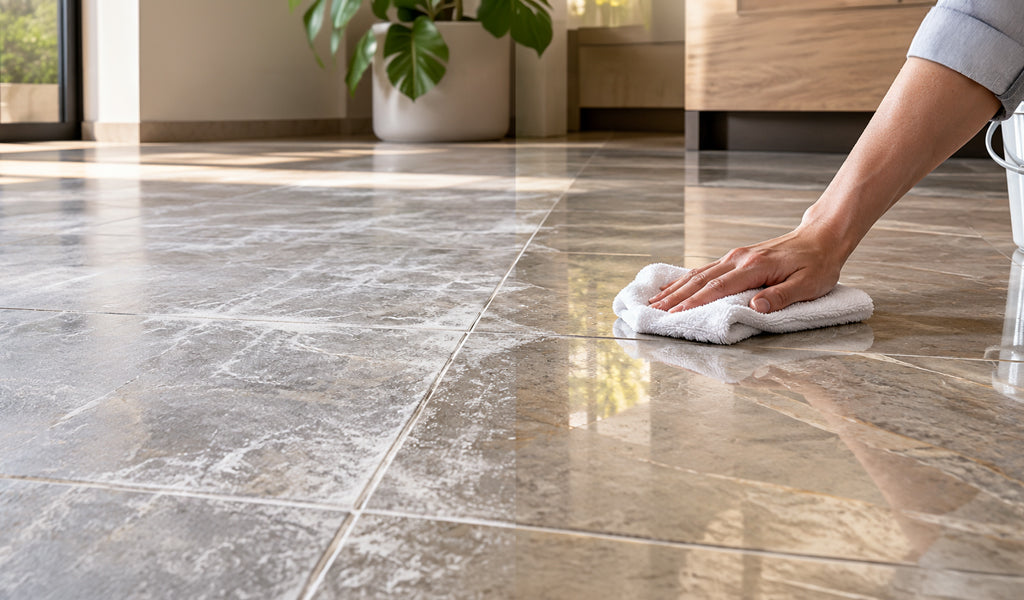
After gently scrubbing, rinse all tiles again with clean water in order to wash off any remaining traces of cleaning products from the surface. Complete your work by wiping off your tiles with a clean, dry cloth.
What You’ll Need Before You Start Cleaning
Before starting the cleaning process of your shower tiles, it is important to have all the right tools. Using the wrong materials can cause your tile to become scratched or dulled, making the entire cleaning process ineffective.
Soft sponge or microfiber cloth
Soft-bristled brush for grout lines & crevices
Neutral pH cleaner or mild cleaning solution
Spray bottle for easy application
Squeegee to remove excess moisture
This will prevent any harmful chemical reactions that could harm your tiles, especially if they are made of natural stone, like our Cream Soft Earthy 12x12 Foiled Texture Square Stone Mosaic Tile. A spray bottle will make it easier to apply your cleaning solution, while a squeegee will help remove excess moisture from the surface.
Simple Natural Ways to Clean Tiles Without Harsh Chemicals

There are many other natural solutions that will get rid of any dirt, without using harsh detergents.
Water & White Vinegar
An excellent alternative is the combination of water and white vinegar, which is the best way to clean shower tile soap buildup, and hard water. All you need to do is spray a mixture of these substances on the tiles, wait for a few minutes, and wipe the area. However, be careful not to use vinegar on marble tiles because of its acidity. Read more on the most effective way to clean marble: Is Your Marble Cleaner Killing Your Tiles? Here’s What to Do.
Baking Soda Paste
Another solution to try is baking soda. All you need to do is make some paste by mixing baking soda with water, and apply the substance where necessary. Baking soda works great on tile surfaces and grout lines, and does not cause any harm.
Dish Soap Boost
Additionally, some dish soap in the mixtures mentioned above can be really helpful for cleaning out grease. Such natural solutions tend to be efficient when learning how to clean shower tile surfaces.
Common Cleaning Mistakes That Can Ruin Your Tiles
Some cleaning practices could do more harm than good. We have compiled a few things that should be avoided for good tile cleaning without causing any damage.
The use of harsh scourers such as steel wool could scratch tile surfaces and dull their shine. This reduces the lifespan of your tiles since they are easier to stain.
Harsh chemicals, including those with bleach, could erode the surface of grout and change color in certain cases. While this gives you an instant fix, it could also lead to permanent damage.
Neglecting to rinse off cleaning solutions is also another mistake that most people make. Residue left by these cleaners could cause streaks and create an oily layer that attracts more dirt.
Ignoring grout cleaning as well could result in an untidy shower in spite of thorough cleaning of your tiles. Effective maintenance includes cleaning the shower grout, too.
Easy Tips to Keep Your Shower Tiles Looking New


With clean tiles, taking care of them will be far easier. There are just a couple of things you can do to ensure that you don't have to scrub surfaces heavily the next time.
Squeegee after every shower
Every time after your showering session is over, you should use a squeegee to remove any residual water on the tiles. Water stains and mineral deposits are prevented by this step. You could also maintain a dry bathroom through good ventilation.
Wipe once or twice a week
Wiping the tiles at least once or twice a week will ensure that they keep looking good for a longer period of time. This is because regular wiping prevents grime accumulation. This is important for large formats such as the Beige 12x24 Field Matte Porcelain Tile, whose smooth matte surface should be maintained to keep the bathroom looking clean and fresh.
If you're looking for ways on how to clean a walk-in tiled shower, it might be wise to remember these simple maintenance tips as well.
How Often Should You Really Clean Shower Tiles
It depends on several factors, but the answer lies in having a schedule. Weekly maintenance is enough for the majority of the homes, and even light maintenance is quite sufficient.
Light Maintenance
Sufficient for most homes
Heavy Use / Hard Water
Clean more frequently to prevent stubborn stains
Deep Clean
Grout cleaning & full polish at least once a month
If your bathroom sees heavy use or you live in an area with hard water, you may need to clean more often. Regular upkeep prevents stubborn stains and reduces the need for aggressive cleaning methods.
Understanding proper shower tile cleaning will help prevent the necessity of applying any drastic measures later.
When to Deep Clean Your Shower Tiles
Despite maintenance, sometimes your tiles may require thorough cleaning, which implies getting rid of accumulated dirt, cleaning grout, and polishing them again. Deep cleaning of your tiles needs to be conducted at least once per month, and if you see that your tiles become dirty faster, you should do this more often.
In case of persistent dirt, grout discoloration, or any other problem that might appear during cleaning, you can find special cleaners for different types of tiles. Just be careful because there are various types of materials.
Knowing how to clean a tile shower perfectly will help you avoid any difficulties in the future.
Conclusion
Your shower tiles do not have to be exposed to toxic cleaners or endless scrubbing for you to keep them perfectly clean all the time. There are ways through which you can clean your tiles easily without damaging their protective coating. All you need to do is be consistent, and the tiles will serve you for years to come.
Frequently Asked Questions
1. Can vinegar or baking soda damage certain shower tiles?
2. How do you prevent mold from coming back after cleaning?
3. What causes yellow or pink stains on shower tiles?
4. Why do shower tiles still look cloudy after cleaning?
5. Can you use the same cleaner for tiles and grout?
6. What do professionals use to clean showers?
7. How do you keep glass and tile surfaces clean at the same time?
8. Can steam cleaning damage shower tiles or grout?
While steam cleaning ceramic or porcelain tile is usually safe, extreme heat and steam pressure can weaken areas where the grout is damaged. This process should only be used where you are sure that your tiles can endure steam cleaning.