

Epoxy Grout vs Cement Grout: Which Is Right for Your Tiles?
Apr 22, 2026 8 minute readNo matter the size or shape of tiles, they all have grout lines that need to be filled, making the choice between epoxy grout vs cement grout essential. Any seasoned tile setter knows that picking the right type of grout is a huge factor in how beautiful a wall or floor tile installation looks a few years later or appears a decade older than it is.
Beyond looks, the grout you select also affects how tilework performs and holds up over time. The last thing any homeowner wants is grout lines beset with issues, everything from crumbling corners to gray staining and efflorescence build-up that takes years off the lifespan of what could be a solid and visually impactful installation. So, how do you choose between epoxy vs cement grout? Ahead, we take a deep dive into each type, their key differences, benefits, limitations, and best uses so you can make an informed decision for your next tiling project.
Key Takeaways
- Choosing between epoxy grout vs cement grout depends on the project demands and long-term maintenance requirements.
- Cement grout combines cement, water, and often sand to create a solid filler between tiles, but requires sealing as a protective armour against wear, moisture, and stains.
- Epoxy resin, hardener, and filler powder provide exceptionally durable, waterproof, and chemical-resistant grout lines even in the most demanding of environments.
What Are Epoxy Grout and Cement Grout?
Does epoxy grout differ from cement grout? To answer this question, it’s important to first understand what they are. Cement grout is a more traditional option that has been around for well over a century. It’s available in sanded and unsanded options, with the former made from a mixture of cement, fine sand, and water, and the latter with the absence of sand in its composition.

Both sanded and unsanded grout are popular within the home, easiest to use, and affordable. Perhaps the only setback is its porous nature, meaning it absorbs moisture, stains more easily, and requires periodic sealing to maintain its appearance, quality, and longevity.
Meanwhile, epoxy grout has become widely used by tilers, delivering superior benefits that homeowners appreciate. Made of epoxy resin, hardener, pigments, and filler powder, it works magic in high-traffic and wet areas because it acts as a sealing adhesive where an extra level of protection is needed against wear and water damage.
Key Differences Between Cement Grout vs Epoxy Grout
While cement and epoxy grout both fill tile joints, their composition and performance set them apart. As stated earlier, Portland cement grout is affordable and easy to work with, but it's also easily affected by moisture, wear, and staining if not properly sealed. In contrast, epoxy might come with a higher upfront cost, but it is impermeable and forms a waterproof and stain-resistant bond. And as a bonus, it does not need sealing or special care to retain its quality.
This table summarizes the key differences between epoxy grout vs cement grout:
| Features | Epoxy Grout | Cement Grout |
|---|---|---|
| Appearance | Smoother or slightly glossy | Textured, matte finish |
| Composition | Epoxy resins and filler powder | Cement, water, and sometimes sand |
| Water-resistant | Non-porous | Porous unless sealed |
| Stain-Resistant | Highly stain-resistant | Prone to staining, requires sealed |
| Durability | Extremely durable | Durable but can crack or chip |
| Application | Challenging, faster setting time | Easy to apply, longer working time |
| Cost | Higher upfront cost | Lower upfront cost |
| Best Uses | Residential and Commercial | Residential |
| Maintenance | Minimal, does not need sealing | Needs regular sealing and cleaning |
While non-porous and highly stain-resistant to most household spills and dirt, epoxy grout is not stain-proof. Under certain conditions, such as oils, dyes, or harsh chemicals left sitting too long, it can stain. Any indoor or outdoor use requires proper cleaning and maintenance.
Durability, Water Resistance, and Stain Protection
When comparing cement grout vs epoxy grout, three characteristics stand out: durability, water resistance, and stain protection. Here's why. These properties are necessary to the performance of any installation, especially in demanding environments.

The benefits of epoxy grout are far superior to traditional cement grout. It has high strength that delivers structural stability over time and can withstand high footfall, chemicals, and harsh weather conditions without staining or cracking. Such characteristics help epoxy maintain its joint integrity and color for years, even when used on commercial tile. If you’re after a resilient and efficient way to do tilework, you’ll have peace of mind knowing your installation requires no sealing or specialized care to keep in tip-top shape.
This said, the robustness of epoxy grout does not diminish the durability of cement grout. It, too, can handle wear and tear and maintain its integrity with proper upkeep. But because it is porous, it is susceptible to stains and is easy for mold and mildew to gain a foothold. Cleaning with harsh chemicals and abrasive tools can weaken cementitious grout, causing it to crack and crumble. Sure, it can be used on high-traffic, outdoor, and bathroom floor tile, but it will need periodic sealing to maintain its quality and appearance.
Installation Process and Ease of Use

The application process and ease of use are other factors to consider when weighing between epoxy grout vs cement grout. The presence of water in cement grout slows down drying, allowing for longer working time while still achieving maximum hardness. This makes it especially appealing to amateur installers and small installation projects.
On the other hand, epoxy grout can be challenging to work with. It requires precise mixing and quicker application in small sections due to its faster curing time. Excess resin residue should be wiped off promptly from the tile surface because once it hardens, it can be tough to remove.
Cost Comparison: Is Epoxy Grout Worth the Price?
The cost also separates epoxy vs cement grout. That’s because epoxy resin and filler can cost three to four times as much as traditional sanded or unsanded cementitious grout due to advanced formulation and longer lifespan.
Cement grout, by contrast, is more cost-effective, which is why it’s still a preferred option for most professional tile setters. But here’s the thing most people miss. While epoxy grout has a higher initial cost, it’s a far more reliable investment down the road thanks to its technical qualities and lower maintenance profile.
Best Use Cases: Where Should You Use Each Type of Grout?

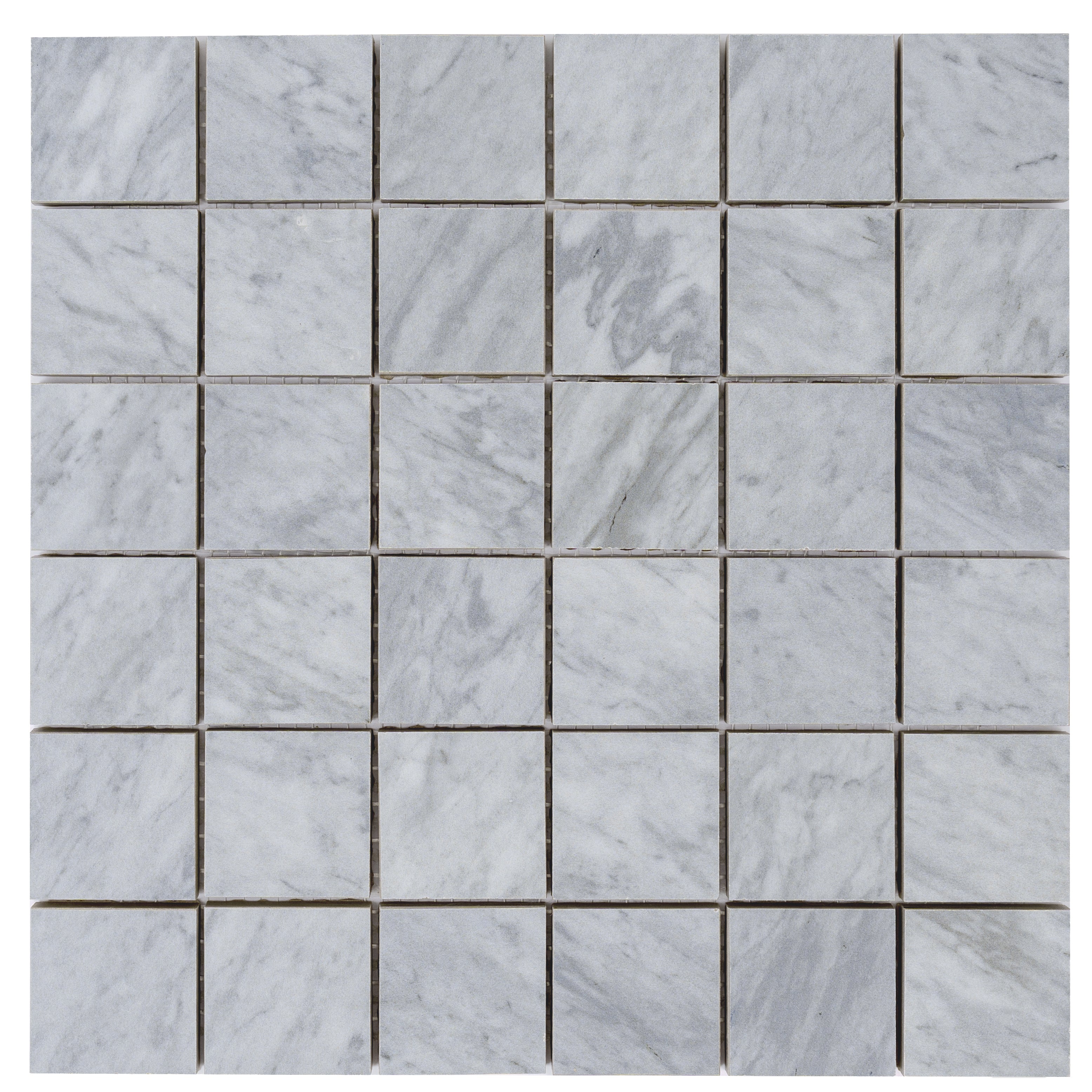
As for the best uses of each type of grout, both are suitable for indoor and outdoor tile. So what is epoxy grout used for? The mixture of epoxy resin, hardener, and filler provides crack-free, wear-resistant joints for high-traffic commercial and residential settings. Cement grout is also sufficient for flooring in low-use areas. Both grouting materials can be used with some of our products, such as Smoke Blue 12x12 Matte Gres Porcelain Square Mosaic Tile.
In wet environments demanding resistance to moisture, stains, and chemicals, the benefits of epoxy grout make it a clear winner. Cement-based grout is not inherently waterproof, so any wet-area tiling should be sealed periodically to prevent water damage. The best grout for pool tile? Epoxy grout won’t break down under water immersion or be affected by pool chemicals like chlorine.
Common Mistakes to Avoid When Choosing Grout
Choosing between epoxy vs cement grout can lead to project mishaps if not done right. Below are some of the common mistakes to look out for:
Focusing on the cheapest upfront cost and ignoring long-term performance.
Overlooking project demands and using the wrong grout in the wrong area.
Underestimating application difficulty and long-term maintenance.
Not considering grout color and how it complements tile design.
Conclusion
To choose between epoxy grout vs cement grout, it’s important to understand the key differences between the two and how they affect performance over time. Both grouting materials are unique in their own way, but differ significantly in durability, maintenance, longevity, and cost. In the end, the best grout aligns with the demands of a space, as well as budget and long-term expectations. If you’ve decided on traditional cement grout, check out our blog on how to seal grout on tile floor.