

Kitchen Tile to Wood Floor Transition Ideas: Tips and Inspiration for 2026
Mar 16, 2026 11 minute readKitchen design continues to evolve toward open-concept layouts, multifunctional spaces, and seamless transitions between flooring materials. One of the most common yet sometimes overlooked design challenges in modern kitchens is the transition between tile and wood flooring. Whether you’re updating an existing kitchen or planning a new build, how you handle the junction between these two materials can dramatically influence both aesthetics and functionality.
This comprehensive guide explores innovative ideas, smart solutions, and expert tips to make your kitchen tile to wood floor transition a design highlight, not an afterthought.
Key Takeaways
- In open-concept layouts, the transition between tile and wood flooring does more than connect two materials; it helps define zones, guide movement, and maintain visual flow between work areas and social spaces.
- Whether using straight edges, beveled transitions, or decorative borders, a successful kitchen tile to wood floor transition accounts for height differences, moisture protection, and cohesive color pairing to ensure long-lasting performance and a well-appointed look.
Why Kitchen Flooring Transitions Need Special Planning

One of the biggest mistakes homeowners make is treating transition between differing flooring materials as an afterthought. In reality, they should be considered early in the planning stage, alongside cabinetry placement, appliance layout, and lighting design. Key factors to plan ahead include:
- Material thickness to ensure both surfaces align evenly
- Direction of wood planks relative to the tile pattern
- Expansion space for wood flooring
- Transition placement relative to islands, cabinetry, or doorways
When these details are planned early, the meeting point between kitchen tile and wood flooring can look intentional, seamless, and beautifully integrated into the overall design scheme. Ultimately, the place where these two materials meet shouldn’t just be a construction detail - it’s an opportunity to improve the flow, functionality, and style of your kitchen.
Where Tile and Wood Floors Meet in Kitchen Layouts

Kitchen flooring often needs to serve multiple functions: durability near water sources and worktops, comfort underfoot from standing for long periods, and visual harmony across adjacent rooms. That’s why it’s common to see floor tile near sinks, dishwashers, and cooking zones, while wood floors extend into dining areas, living rooms, and high-traffic pathways.
As open-concept living continues to dominate home design in 2026, designers frequently combine tile and wood flooring to balance durability, comfort, and visual continuity. Understanding where these materials meet is essential for creating a cohesive layout that doesn’t feel fragmented.
High-Function Areas vs Comfort Zones
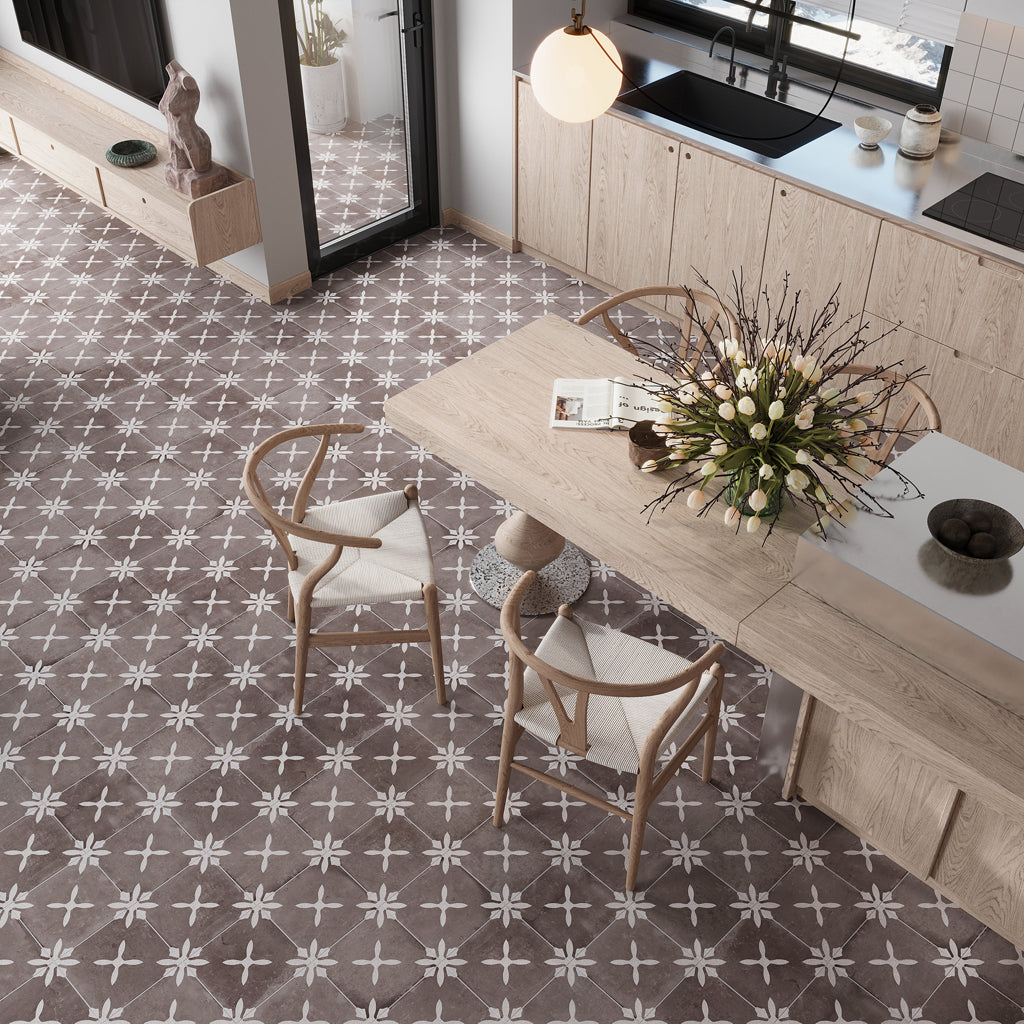

Kitchens are one of the hardest-working rooms in a home. Different parts of the space experience very different conditions. Flooring tile, such as our Terracotta Brown 9x9 Matte, Glossy Floral Square Porcelain Tile, is durable, stain-resistant, and easy to clean, making it ideal for demanding zones exposed to:
- Water and spills near the sink and dishwasher
- Grease and heat around the stove or cooktop
- Heavy traffic in the prep zone
- Dropped utensils, pots, and kitchen tools near worktops
On the other hand, wood brings warmth, comfort underfoot, and visual continuity, making it perfect for spaces where people gather and linger. It is often used in areas designed for:
- Seating around kitchen islands
- Entry points to adjacent living rooms
- Walkways connecting the kitchen to other spaces
Why Tile and Wood Are Commonly Paired
Combining flooring within a single space has become a popular design strategy because it brings together the strengths of two very different materials, aesthetically and practically. Before diving into kitchen tile to wood floor transition ideas, let’s explore why these two timeless surface coverings are often paired:
1. Durability
Ceramic and porcelain tile are inherently water-resistant, hardwearing, and easy to clean, making them a fabulous fit for areas prone to spills and moisture. Wood flooring, on the other hand, provides comfort and warmth underfoot. It feels softer and more forgiving when standing for long periods, which is especially beneficial around seating spaces like breakfast nooks and kitchen islands. Hardwood also creates a more inviting atmosphere, making the kitchen feel connected to the rest of the home.
2. Visual Zoning
Another major advantage of a kitchen tile to wood floor transition is the ability to define different areas without adding physical barriers. Modern homes often rely on open layouts where walls are minimized, and a sense of organization and structure is important. In these spaces, flooring changes can signal “work” areas versus “gathering” areas. For example, non slip tile can highlight the primary cooking and prep area, while wood flooring can signal gathering and dining spaces.
3. Aesthetic Appeal
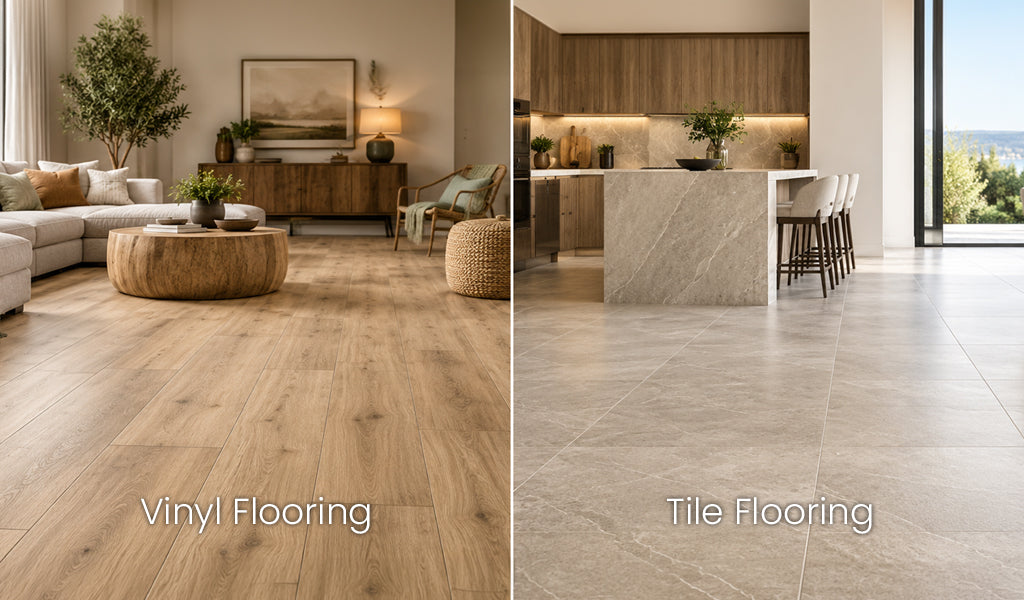
The contrast between sleek, cool tile and warm, tactile wood creates visual interest and texture juxtaposition. How, you ask? Tile typically has a cooler, smoother appearance, especially when using materials like porcelain, ceramic, or natural stone. Wood, by contrast, introduces warm tones, natural grain patterns, and organic texture. Kitchen floor tile next to hardwood delivers a balanced aesthetic: glossy or matte tile surface complements the natural texture of wood, and a cool-toned tile can balance warm wood finishes.
Using Floor Transitions to Define Kitchen Zones

In modern design, kitchen floor transition ideas that blend into dining rooms, living areas, and entertaining spaces can serve as a practical way to define zones, organize a space, and guide how each area is used. The changes from one material to another create functional boundaries that don’t interrupt flow or block sightlines, but instead, ensure that each part of the space has a clear identity. For instance:
- Tile can anchor the kitchen work triangle, where cooking tasks take place.
- Wood flooring can extend outward, directing foot traffic toward dining areas or living rooms.
- A linear transition under a kitchen island can subtly pair the workspace and gathering space.
Popular Tile-to-Wood Transition Styles for Kitchens
There’s no correct way to handle a kitchen tile to wood floor transition, but some approaches are more successful than others. Here are the most popular and enduring styles to consider:
Straight Edge Transitions: This is the simplest look, where tile and wood meet cleanly with a straight line. It works best when both materials are the same thickness, or a small height difference can be corrected by underlayment.
Beveled Transitions: Traditional and transitional settings, a beveled edge softens the kitchen tile to wood floor transition. The slight slope creates a pleasant visual shift and can help reduce the height difference.
Threshold Transitions: A raised threshold piece, often wood or natural stone, provides a clear scale change between rooms.
Patterned Border Transitions: Instead of a straight line, use a tile border, mosaic strip, or contrasting wood inlay at the junction. This turns an open concept kitchen to living room floor transition into a design element that adds visual interest and ties both materials together with a unifying motif.
Matching Tile and Wood Finishes for a Cohesive Kitchen Look

When pairing materials, cohesion is key. Clashing kitchen tile to wood floor transition ideas can make even the best combination look disjointed.
1. Color Harmony
Aim for complementary color tones:
- Warm wood pairs beautifully with tiling in warmer beige or terracotta, like Terracotta 18x18 Matte Square Porcelain Large Format Tile.
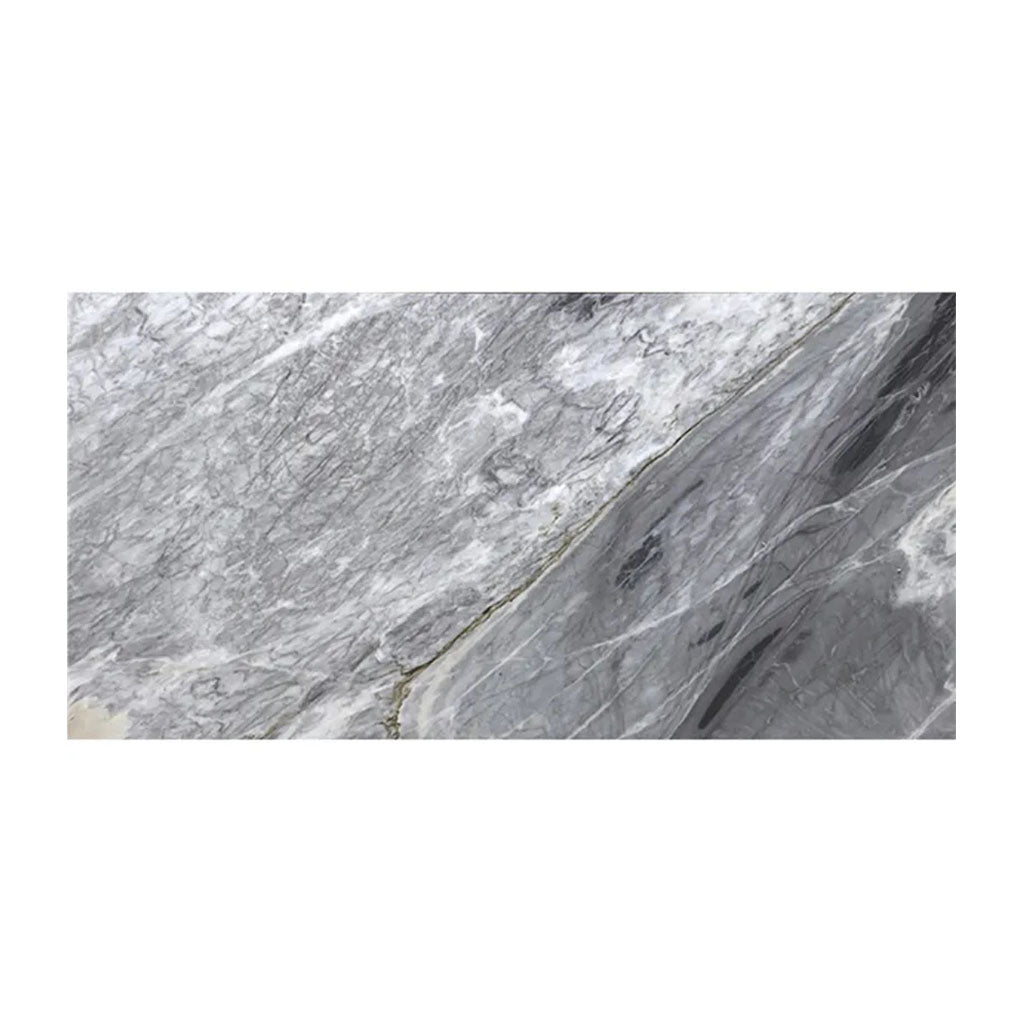
- Cool gray tiles, such as Gray 12x24 Honed Calacatta Bluette Marble Large Format Tile, echo beautifully with ash, oak, or espresso wood tones.
- Neutral tiles in white, beige, taupe, or ivory act as a backdrop for richer wood hues.
Pro Tip: Match at least one undertone (warm or cool) across both materials so the transition feels intentional.
Repeat Materials in Other Elements
Tie your floor transition into other kitchen elements to create a harmonized palette throughout the space.
- Cabinet finishes: Match wood tone or undertone.
- Backsplash tiles: Use colors that reflect hues in the wood grain.
- Countertops: Choose complementary surfaces.
Coordinate Texture and Pattern
Textures can help or hinder a kitchen tile to wood floor transition. If the tile has a busy pattern, keep the wood grain or finish subdued, and vice versa.
- Smooth, matte tiles pair with natural wood for organic warmth.
- Glossy tiles next to matte wood can feel disjointed unless carefully balanced.
2. Contrast vs. Continuity
2026 trends lean toward thoughtful contrast, not stark clash:
- A light wood floor next to a medium-tone tile creates dimension without tension.
- High-contrast black tile and light wood can feel elegant if echoed in cabinet hardware or lighting fixtures.
Transition Solutions for Moisture and Heat Exposure in Kitchens
Kitchen environments are demanding: spills, humidity, and even heat. That means kitchen tile to wood floor transition ideas must also be functional.
Dealing With Moisture: Tile generally resists moisture better than wood, but improper transitions can allow water to seep under wood, leading to warping.
Expansion and Contraction: Wood expands and contracts with temperature and humidity. Avoid tight transitions that don’t allow movement. To do this, use flexible sealants or transition profiles that accommodate slight shifts without cracking.
Heat Exposure: Make sure to install tiles approved for the function of the room. It should be rated for high heat and transition strips must be heat-resistant, too.
Conclusion
As kitchens continue to evolve into multifunctional hubs, blending cooking, entertaining, working, and living, how we treat flooring transitions takes on new importance. It’s no longer just about coping with two different surfaces; it’s about design integrity, spatial clarity, and long-term performance. The best kitchen tile to wood floor transition ideas tie a design scheme visually together, respect the materials’ unique properties, enhance safety and comfort, and, most importantly, reflect your personal style.
Want to learn more about installing tile in the kitchen? Check out our comprehensive guide: How to Measure and Plan Your Kitchen Backsplash.
Frequently Asked Questions
1. Can kitchen tile and wood flooring meet without a transition strip?
2. What is the best kitchen tile to wood floor transition type?
3. Can hardwood flooring be used safely next to kitchen tile?
4. Where should tile stop and wood flooring begin in a kitchen?
5. What kitchen floor transition works best for high foot traffic?
6. How does kitchen moisture affect tile to wood floor transitions?
7. Can wood-look tile replace hardwood near kitchen transitions?
Yes, wood look tile is often used as an alternative to hardwood near kitchen transitions because it provides the appearance of wood while offering greater resistance to moisture and wear. Porcelain tile that looks like wood is especially popular since it is highly durable and easy to maintain.