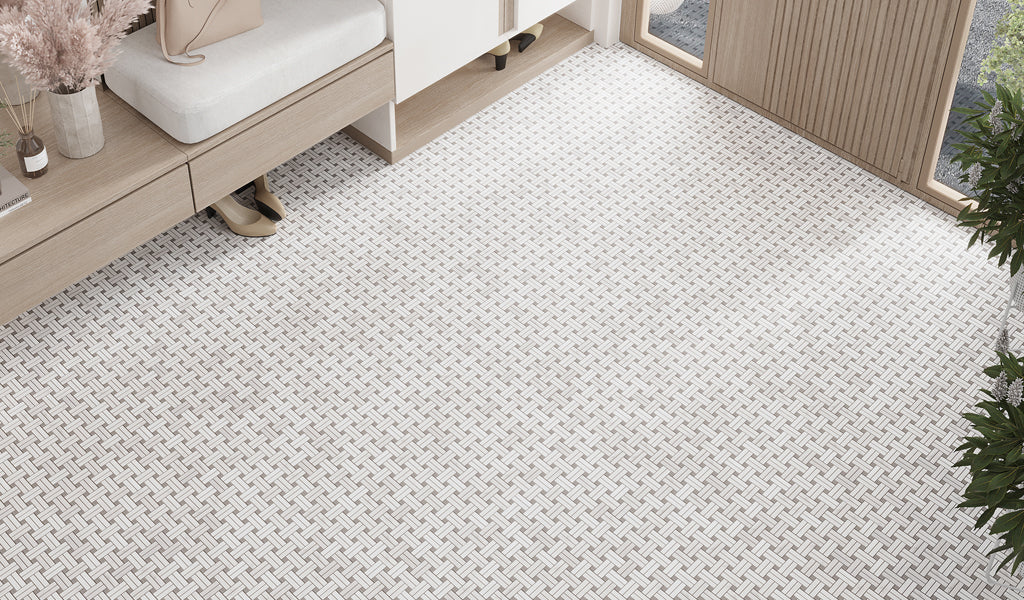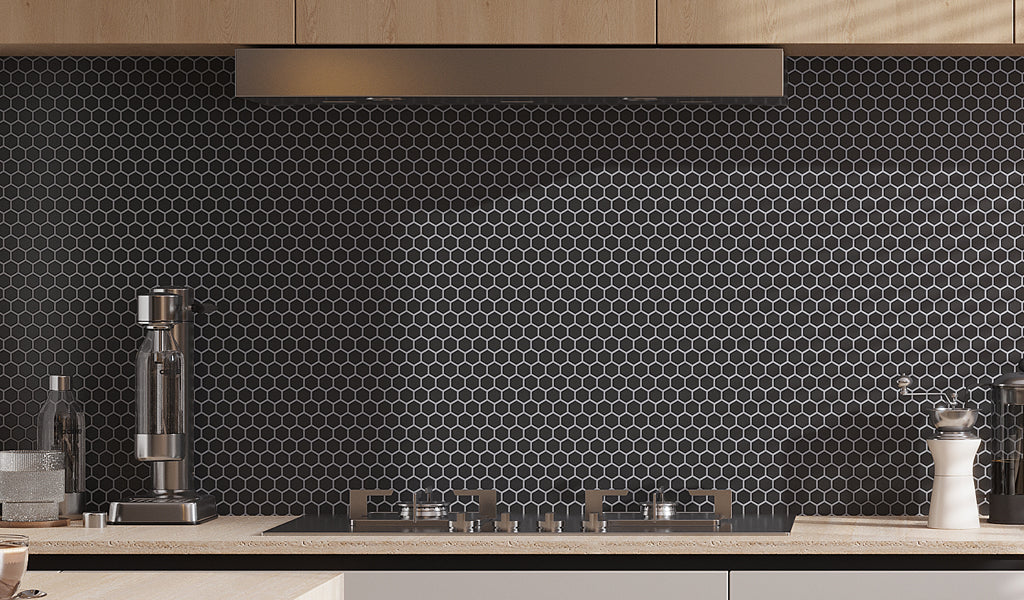


Combining Tile and Wood Flooring: Design Tips and Transition Ideas
Apr 29, 2026 8 minute readThis year’s design language focuses on continuity, craftsmanship, and cohesion. So it’s very little wonder why we’ve seen the rise of dynamic flooring ideas, from combining materials and textures to making statements with patterns. If you have a new project lined up or simply seek inspiration on how to combine tile and wood flooring, you’ve come to the right place. Ahead, we dive into material pairing, why it works for floors, and tips we swear by for a look that’s both beautiful and functional.
Key Takeaways
- Tile and wood floor combination can be a way to show off a design statement and visually separate the different areas within an open-plan layout.
- Flooring transition ideas come in all patterns and sizes, but materials must sit flush to enhance continuity and visual flow.
Why Mix Tile and Wood Flooring

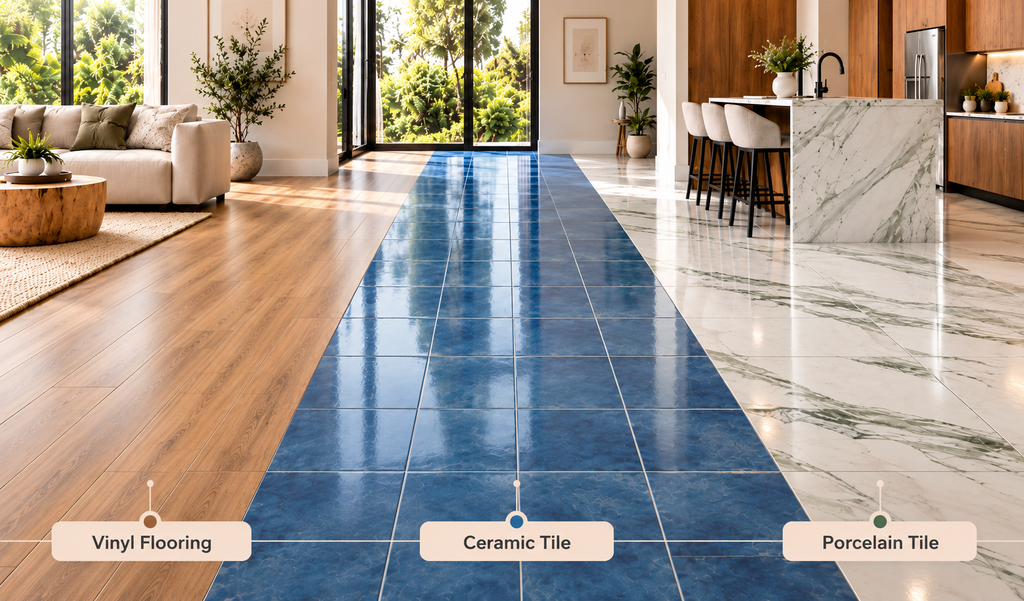
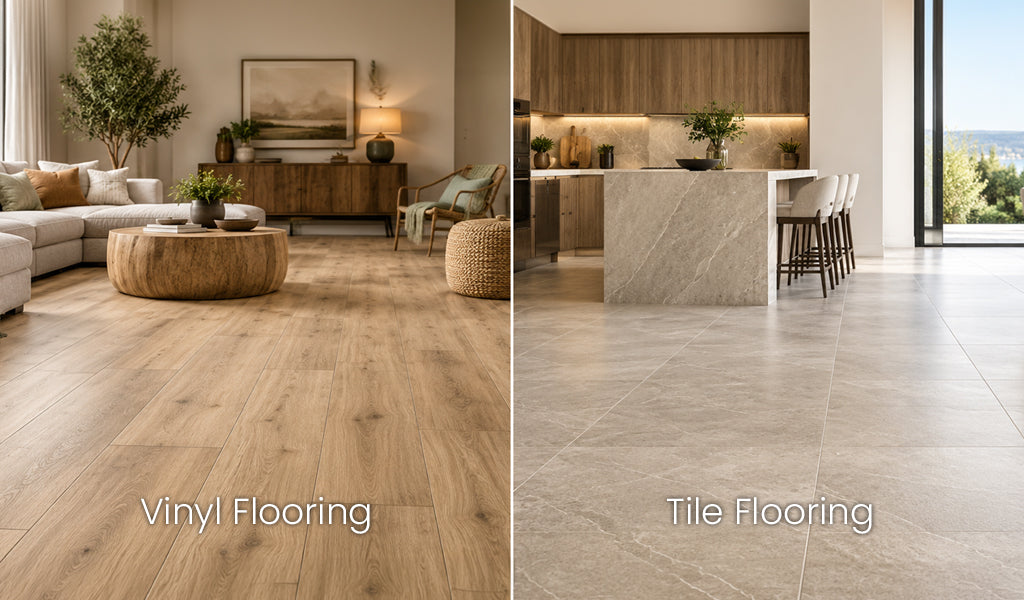
The perfect tile and wood floor combination allows you to color outside the lines and still achieve designer appeal. Tile is rigid, stable, and can withstand moisture and high foot traffic, making it a resilient fit for areas such as the entryway and kitchen. Wood, on the other hand, exudes a natural, cozy aesthetic that makes living spaces feel more inviting and cocooning. Combining the two flooring materials can define zones, which works especially well in an open layout to maintain style and harmony throughout.
A few key reasons why pairing tile and wood works include:
Distinguishes
zones
Great for visually distinguishing areas within an open-concept living space
Durability +
warmth
Tile delivers incredible functional durability, and wood offers warmth and comfort
Interesting
transitions
Transition between the two adds interesting character, texture, and variation
Boosts home
value
Blending the two thoughtfully enhances overall home appeal and value
Best Places to Use Tile and Wood Together
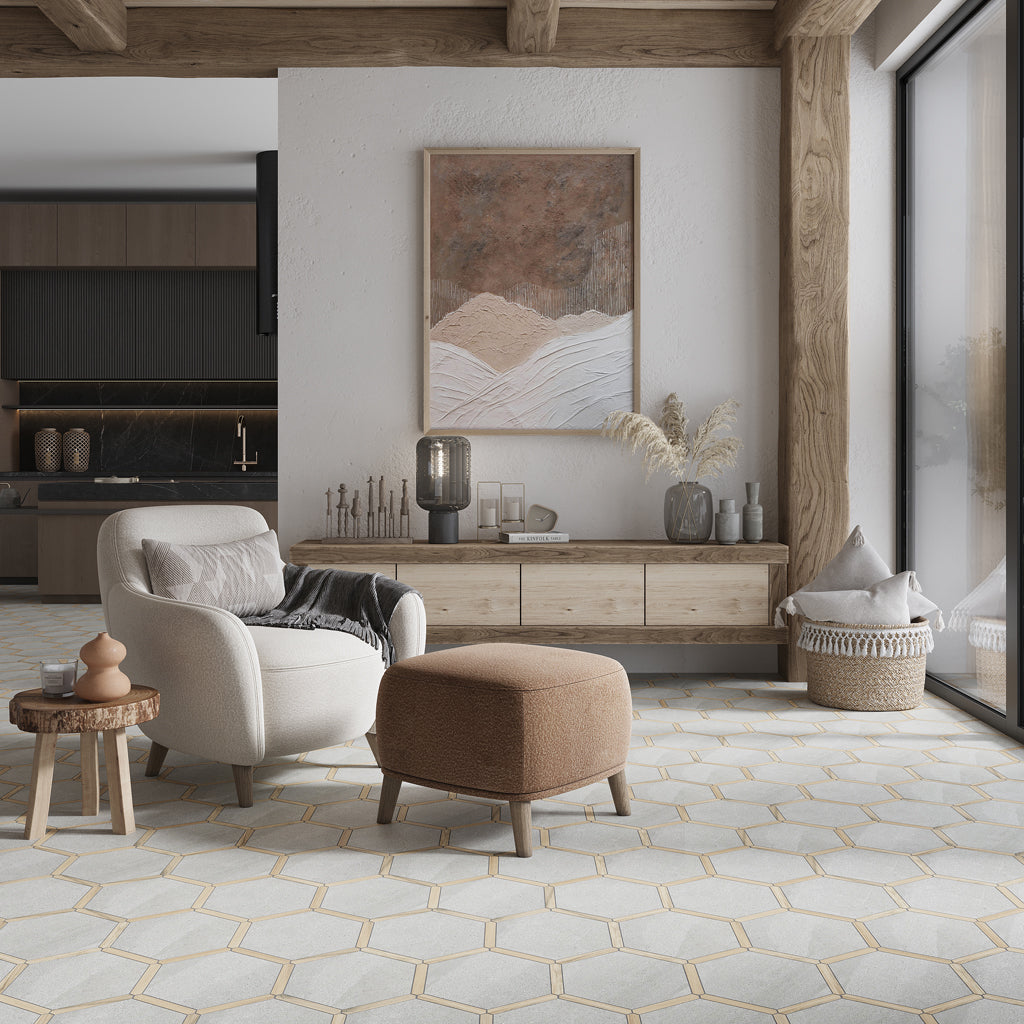
You’ve likely come across them online: tile and wood floor combination pictures that reveal how fabulous this approach to tiling a room can be. Pairing materials is a quiet design detail that has become the benchmark for modern interiors, particularly in spaces where you want to set apart wet and dry zones. It can visually expand a room, determine how fluid it feels, and contribute to its longevity.
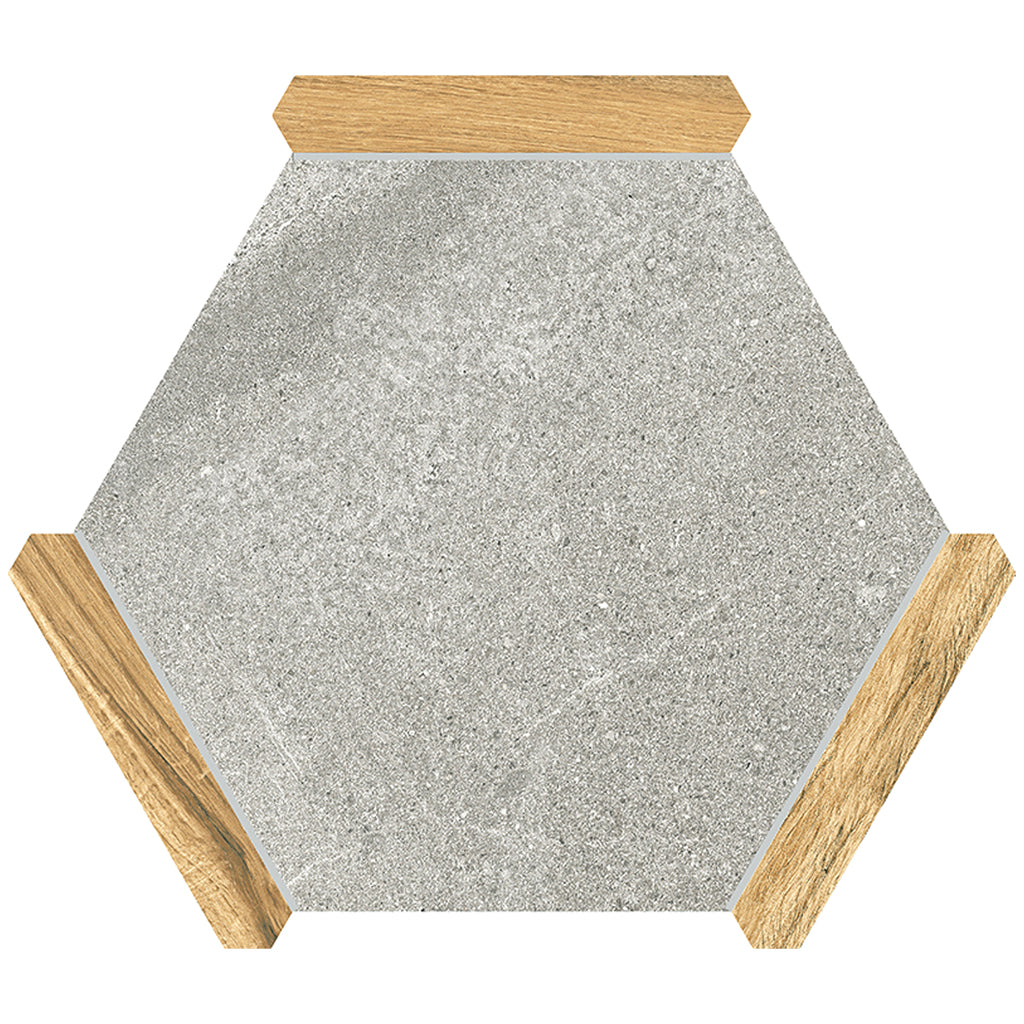
For example, bathroom floor tile can go in the shower and wood the rest of the space. Within an expansive open-layout living area, flooring can help separate the lounge from the dining area where you host friends and family.
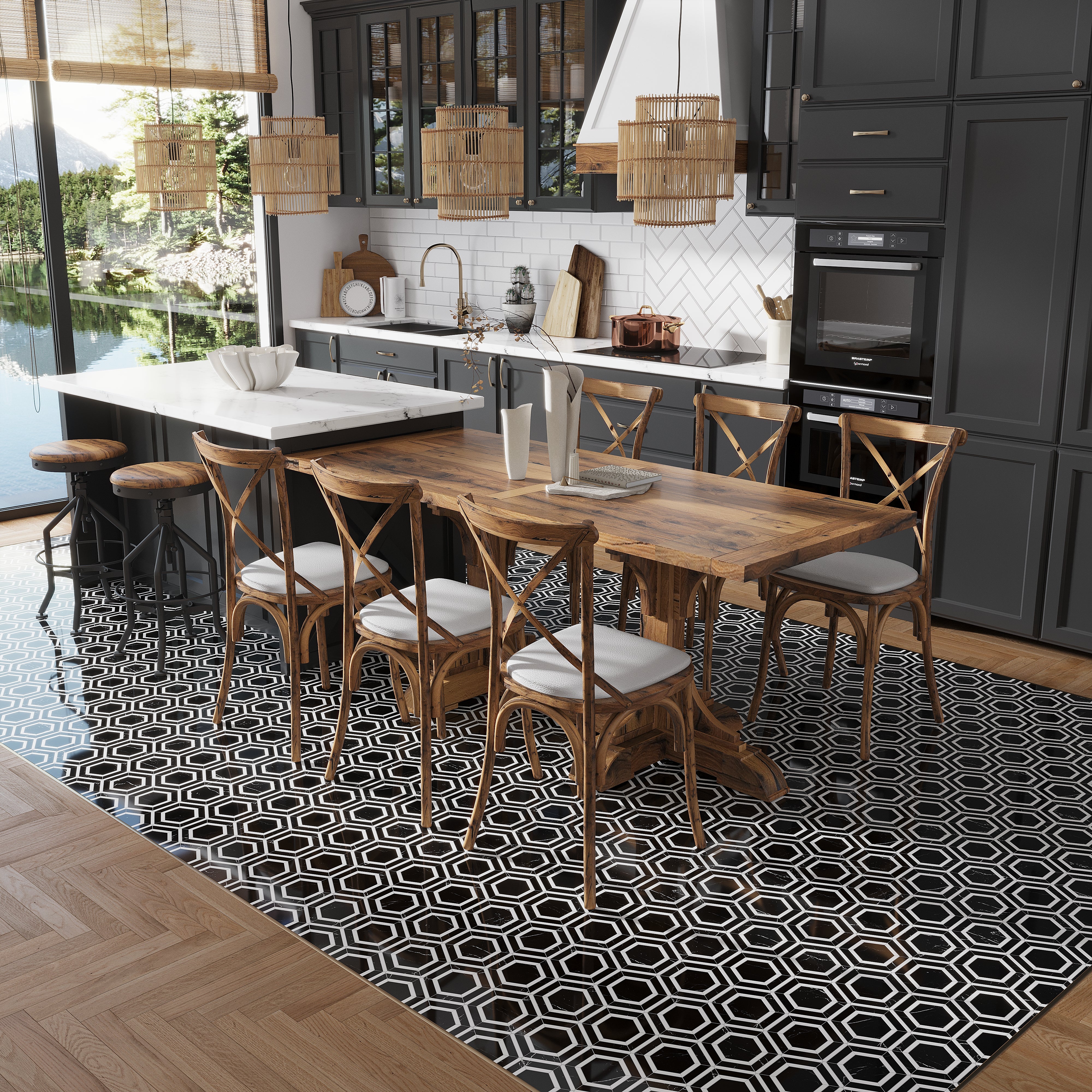
In kitchens, wood can be used to introduce a natural, comfortable feature underfoot around the perimeter of the island. Easy-to-clean floor tile can cover the rest of the room, providing a moisture-resistant and hardwearing surface that stands up to daily footfall.
How to Choose the Right Materials

By curating your material selection with purpose, you can turn a functional tile and wood floor combination into a work of subtle architecture and create a space that feels layered, elegant, and distinctive. Both tile and hardwood provide unique qualities that contribute to the room’s flair and long-term performance. Below are tips on how to choose the right materials to make this transition work:
Consider Durability and Longevity:
When mixing tile and wood floors, think about how durable and robust each material is. For instance, areas that see a lot of high foot traffic can benefit from harder wood species that handle wear and tear like a champ. For areas exposed to moisture and humidity, such as the kitchen or bathroom, the use of porcelain tile offers a reliable, long-lasting solution.
Aim for Balance and Cohesion:
How to combine tile and wood flooring in a way that feels cohesive? With a wide variety of flooring to choose from, color, pattern, and size contribute significantly to the overall results.
Take Cues from The Room’s Aesthetic:
Look to your home’s overall aesthetic as a guide for selecting the right type of flooring. If you’re aiming for a rustic, contemporary scheme, for example, then a stone look tile and wood combination can create a balanced, timeless, and grounded interior.
Pay Attention to Height:
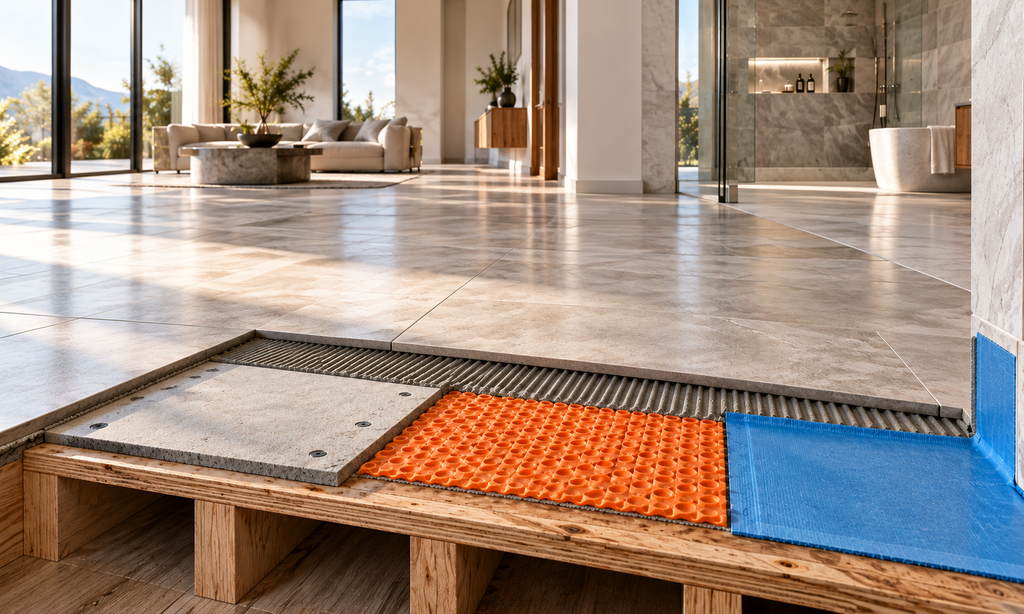
In addition to the color, finish, and texture, make sure to consider the thickness of each material to determine the height. The thickness for flooring tiles like porcelain ranges from 8mm to 12mm, while wood flooring can be 12mm to 20mm. Ideally, the two materials should sit flush for a seamless transition. We will cover how to deal with height differences later on.
Floor Transition Ideas That Work
Whether you’re laying a new floor from scratch or want to add tiles to an existing wood design, a beautiful transition is an exciting way to add polish to your living space. It infuses texture, color, and pattern, setting up the scene for a stylish, functional, and enduring décor scheme. Below are a few ideas to inspire you as you jumpstart your own tiling project:
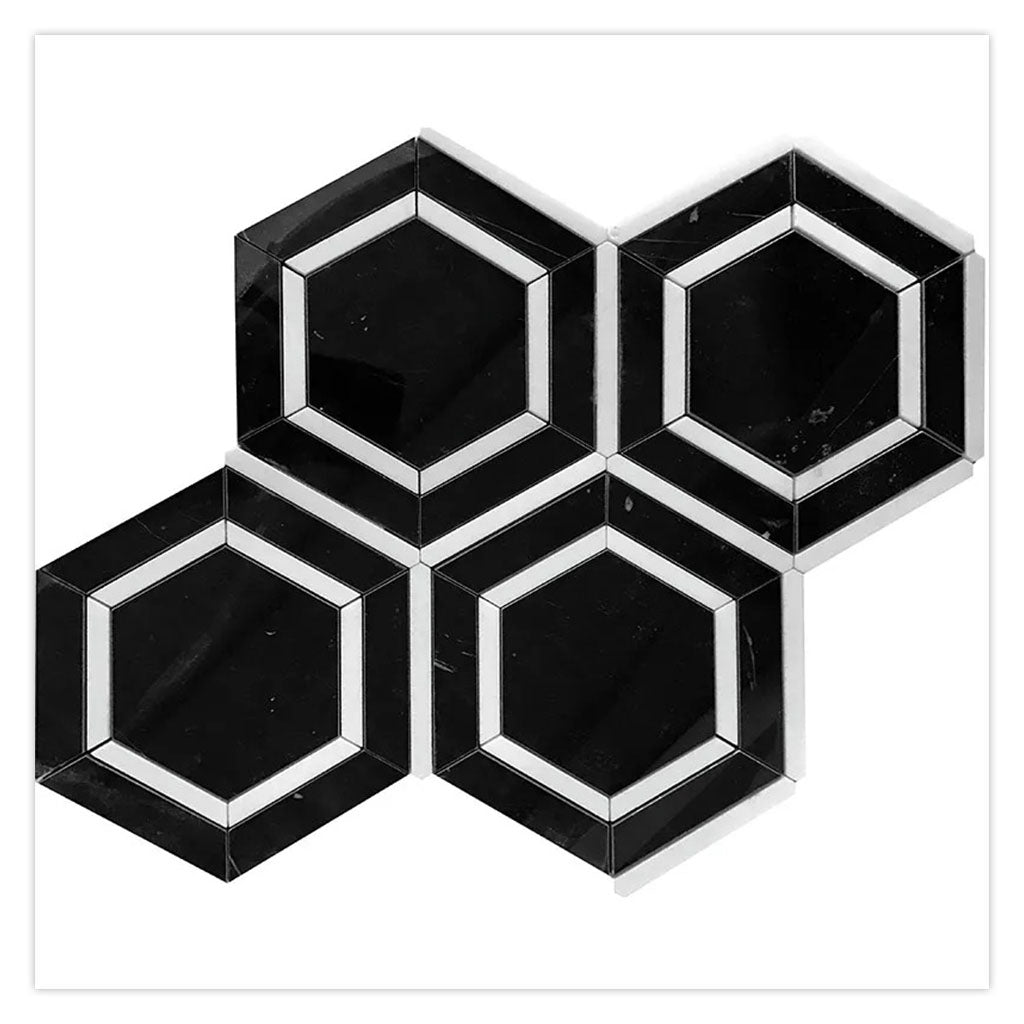
Pair a hexagon tile like Raven Black 11x13 Polished Hexagon Nero Marquina Thassos Marble Mosaic Tile with herringbone wood planks for a striking contrast.
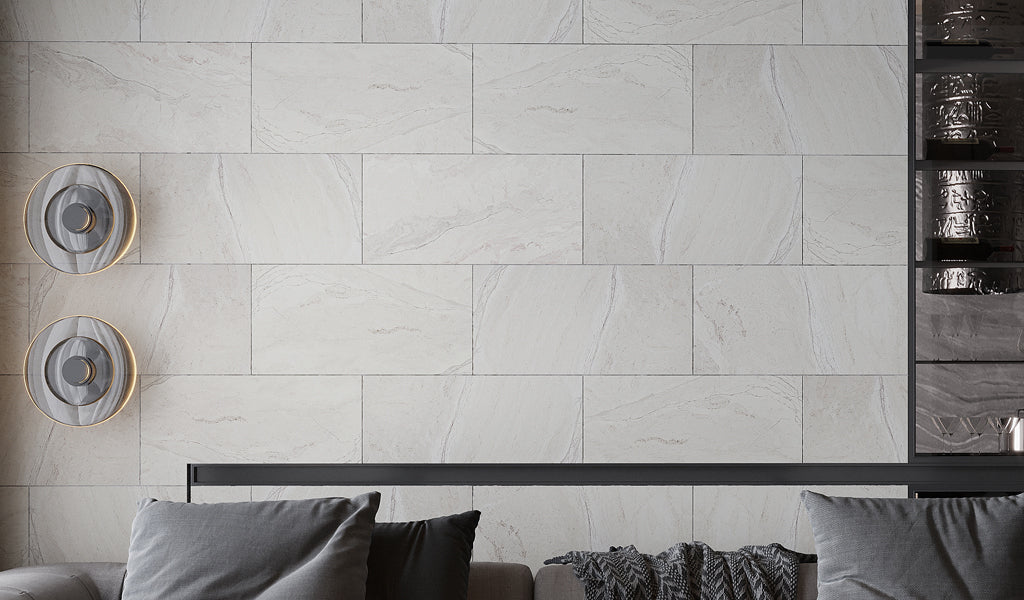
Choose gray stone-look porcelain, such as Ivory Pearl White 24x48 Honed Porcelain Large Tile, with light-colored wood for a modern and grounded scheme.
Opt for a standout marble look like Rosso Levanto 12x12 Matte Gres Porcelain Square Mosaic Tile with rich, dark textured square wood flooring for an opulent feel.
Consider a patterned tile, such as Weathered Slate 8x8 Matte Square Porcelain Tile, with mid-toned chevron wood planks for an eye-catching look.

Design Patterns for Combining Tile and Wood Flooring
Of all the factors when transitioning between tile and wood, the most influential one is pattern. Think about your desired aesthetic and how you want to shape the room’s atmosphere; only then can you decide whether to match or create contrast. Complementary patterns aim for unity, achieved by aligning both materials in the same direction and repeating forms. For example, sticking to a herringbone pattern for both tile and wood.
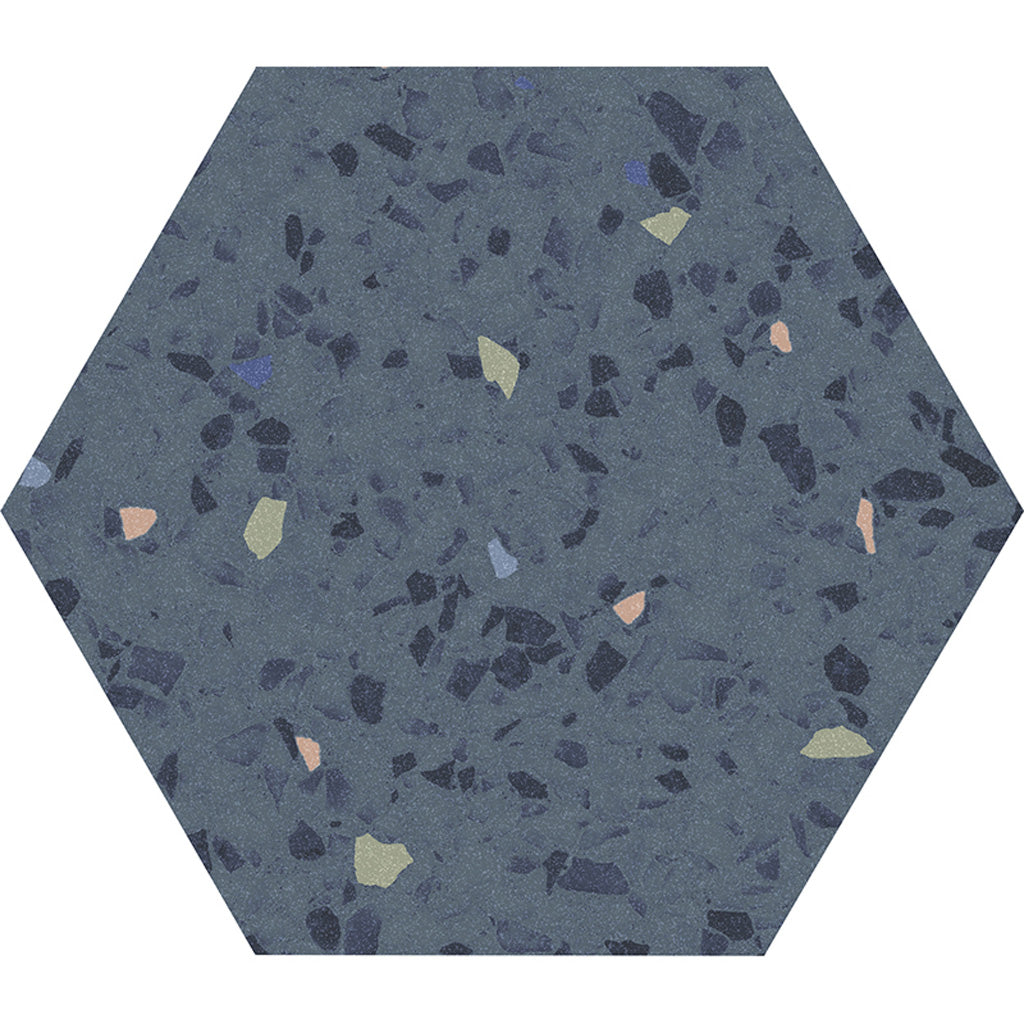
Contrasting patterns can transform a somber space into a centerpiece, for the simple fact that it draws more attention. This can be done by varying shape, direction, or scale, such as pairing straight wood planks with a geometric tile like our Blue 8x9 Matte Hexagon Porcelain Tile. Juxtaposing forms helps highlight specific zones within an open layout.
Matching Colors and Textures for Seamless Flow
How to combine tile and wood flooring in a way that encourages visual flow? Matching color and texture! Here, you can pick tile and wood with similar undertones and finish for a more harmonious design. Matte light-colored wood and matte cool-toned tiles work well together to create an open, airy effect. In comparison, textured tiles alongside rich, dark wood add a layer of complexity and depth.
With this said, you don’t always need perfect matches to attain the wow factor. If you seek something out of the ordinary, transitioning from dark wood to a light-colored glazed ceramic tile can look just as striking, adding an even more dynamic touch to your home.
How to Handle Floor Height Differences
As mentioned above, tile and wood thickness may vary by a few millimeters, which can lead to uneven transitions if height differences are not sorted out during planning. Not only does this look visually unappealing, but even small variations can pose a trip hazard. So, how do you manage the height difference for a tile and wood floor combination? For the two flooring types to sit flush, you can adjust subfloor height, use special underlayments, add a transition strip, or simply choose materials with the same thickness from the get-go.
Conclusion
Creating a seamless transition begins with understanding how to combine tile and wood flooring. Done right, pairing two different materials opens up a world of possibilities, where interiors feel dynamic, inviting, and well-appointed. Start by choosing materials with a shared visual language, and decide if you want matching or contrasting colors, patterns, textures, and sizes. Whether you’re defining zones in an open-plan layout or connecting different rooms, with proper planning, you can craft a home that’s elegant and full of character. Learn more about tile and wood floor transition ideas on our blog: Kitchen Tile to Wood Floor Transition Ideas.