

How to Get Urine Smell Out of Tile Grout (Deep Cleaning That Actually Works)
Jun 22, 2026 4 minute readHaving to deal with unpleasant odor in your home can be quite frustrating, especially when it seems to come back despite your best cleaning efforts. If you find yourself wondering how to get urine smell out of tile grout, you need to understand how it gets trapped in bathroom tile grout in the first place.
- ✓ Urine smell clings to grout because it is porous and holds bacteria in its depths.
- ✓ The best way to eliminate potent and recurring urine smell is by using enzyme cleaners.
Why Urine Smell Sticks to Grout (And Keeps Coming Back)

Grout is a porous material, and this is one of the reasons why it sticks to and holds urine smell. Once urine enters the grout lines, bacteria start to develop and start breaking down the components of the urine, hence producing that awful smell.
While you may be washing your floors often, you may not be able to completely get rid of the smell since most washing liquids only clean on the surface. However, the smell is still trapped in the grout, and this is why the urine smell in tile grout seems to come back after a few hours or days.
What’s the Most Effective Way to Remove Urine Odor from Grout
If you wish to remove urine odor from tile floor, you will need to implement a deep cleaning technique that will address the bacteria in the grout.
Here is a step-by-step guide on how to remove urine smell from grout:
Pre-clean the tile floors
Sweep and mop the tile floors to eliminate dirt and debris.
Apply a cleaning solution
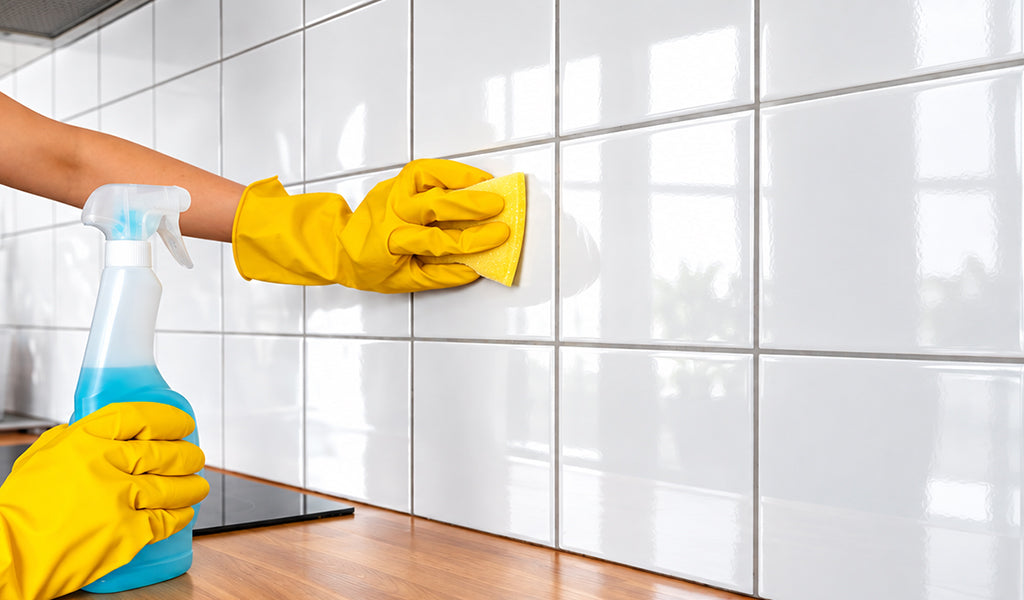
You can make a cleaning solution using warm water and a baking soda paste. Alternatively, you can also make a solution using vinegar and water in equal ratios. This solution should be applied directly to the grout.
Scrub the floors
You can scrub the floors using a brush or even a toothbrush. This will get rid of the urine smell.
Rinse and dry the floors
You should wipe the floor tile using clean water and dry it thoroughly. This will help you learn how to get urine smell out of tile grout.
DIY vs Enzyme Cleaners: What Actually Works Better
While DIY cleaners like vinegar and baking soda can be effective for minor odors and maintenance, they don’t necessarily tackle the uric acid crystals that create lingering odors. Enzyme cleaners, on the other hand, are designed to tackle organic odors like urine. They work deeper into the grout to neutralize odors from within.
In short, DIY cleaners are best for light odors and quick fixes, while enzyme cleaners are best for strong odors and recurring problems. When you are facing problems with urine smell in your tile grout, enzyme cleaners are best for tackling that problem for you.
How to Prevent Urine Smell from Coming Back in Grout
Once you have successfully learned to get rid of urine smell in tile grout, prevention is equally important too. Here are a few tips for that:
Seal Your Grout
Grout sealers can be applied to your grout to prevent liquids from seeping into it and causing odors.
Clean Spills Immediately
The sooner you clean up spills and odors, the better — there is less chance for odors to build up.
Use Enzyme Cleaners
Regular use of enzyme cleaners is recommended for areas that are prone to accidents and odors.
Conclusion
To eliminate unpleasant smells, it is not enough to simply clean up. Instead, one has to learn how to get urine smell out of tile grout and apply the appropriate techniques to achieve this. In this way, not only can you successfully eliminate urine odor on tile floor surfaces, but you can also easily prevent the return of the urine smell with proper maintenance and sealing.